
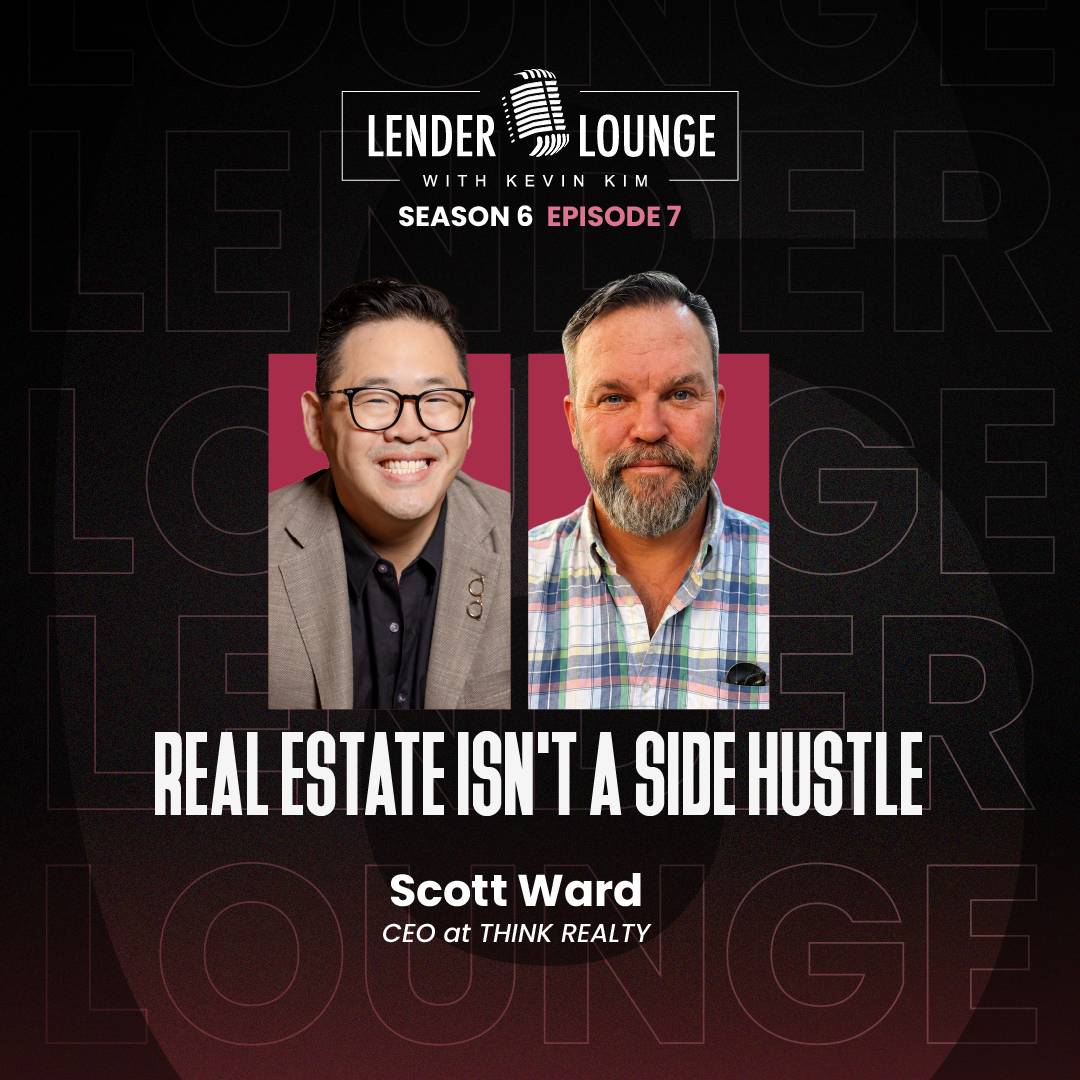


Kevin Kim, Esq.:
You’re listening to Lender Lounge with Kevin Kim, a podcast dedicated to helping our listeners in the private lending industry grow, improve and streamline their business. I’m Kevin Kim, partner at Fortra Law, the nation’s largest private lending law firm. Join me as we chat with the best and brightest in private lending.
They’re eager to share their years of wisdom and best practices for lenders, brokers, borrowers, investors and more. Subscribe to Lender Lounge on your favorite podcast platform and visit our website, FortraLaw.com to learn more about how we can help you scale. Check out the episode summary below for other valuable resources.
Welcome everyone to another episode of Lender Lounge with yours truly Kevin Kim. Today we have a guest that I consider a friend. He doesn’t really need an introduction because you guys have all probably seen him on the multitude of webinars with Apple and, you know, his own stuff online.
But I’m going to let him introduce himself. Scott, please tell us who you are. What it is that you do?
Scott Ward:
Right. I do it all right. So thank you so much, Kevin.
And actually, you know what, I’m so excited because this is the one show that I’ve always wanted to do.
Kevin Kim, Esq.:
Oh, thank you.
Scott Ward:
I’m dead serious. Because I’m so happy at the success you’re having with this concept and this platform as it rolls out. And so now that I finally get to do one, I’m a little giddy.
A little.
Kevin Kim, Esq.:
All right.
Scott Ward:
Well, we’re glad to have you. Well, thank you. So I’m the CEO, current CEO of Think Realty.
And Think Realty, if anything, is really an education home base and kind of an ecosystem to help smooth the turbulent era for real estate investors through knowledge, connections, database, to be able to really cover all those kind of mystery points out there. Because you know that there’s four networks right now that run these types of investment real estate TV shows 24 hours a day. Right.
And many of them are years and years old. And you know, it’s a reality TV show. So there’s no reality to it really.
And so we kind of take the the clear point view of really getting people the facts that they need, you know, and really having so much in the in the way of education, true education and connection to legitimize what they’re what they’re really doing. Because it’s one thing to understand something. It’s another thing to actually know how to make the chocolate chip cookies.
Right. So, so that’s really kind of what our specialty is. We’ve been around about 13 years.
And we, you know, we’ve got a database, a couple hundred thousand now of subscribers and members that we reach out to. We do podcasts, and we do webinars, as you know, and we’ve got an e-zine that we put out there. And we’re going back to some some pretty robust live events coming up here.
And so we’re real excited. It’s good time. It’s good time.
Kevin Kim, Esq.:
Now, you weren’t always a CEO of Think, right? So I was not. You joined, I mean, my understanding is, yeah, give us a story there, because a lot of our folks, they’ve heard of Think Realty, they’ve, you know, a couple of them been to, I’ve been to a few things, but over the years, but, you know, give our audience kind of the background there, because it’s a pretty cool story.
Scott Ward:
Well, thank you. You know, I started off like I do in many of these, these interviews and stuff that I do, I got into private money investing, I got tricked into getting into it, I was going to do it as a side hustle to make some cash, like a lot of people that get into this, and this was about 27 years ago. And had I known that I would be here, all these years later, still in this business in this industry that I love, I love I just, some people take to it like that.
And I was one of those lucky ones. And I had great mentorship, right. But prior to that, I was a paramedic firefighter, I was a touring headline comic for the improv, I was, man, a lot of different stuff.
I did reality TV shows myself, I was a bartender, I was a bar manager, tried to make a run at playing golf for a hot second, some delusions of grandeur there, right. And so, you know, coming through that, and it was kind of a, you know, skinny kid that grew up in hills from Lansing, Michigan, originally, diehard Michigan State fan go green. I moved out to California.
And that’s, that’s really kind of where I was really lucky and got into this with a father son company, right in Southern California, right down there by your guy’s office. And really, I was really fortunate. The mentorship thing on that, to learn from guys that were really ethical, very solid in the space.
I often tell everybody that I’ve never been sued, I’ve never been sanctioned. I wear that like a badge of honor, especially coming out of a weight, right? Because there were a lot of guys that cut corners and stuff like that.
And there’s a right way and a wrong way to do things. And so that’s kind of what what our mission statement is, is to really bring back that old school mentorship and help people for the sake of helping people, not trying to, to, you know, to dip into their pocket.
Kevin Kim, Esq.:
Right. And so what what brought you to think because I think it’s really focused on the investor side, the real estate investor side, right? So the folks that are swinging the hammers and investing in the real estate, you know, your background in our industry is more on the lending side.
So how did that happen? Because it was, you know, I had known you through lending, right? And you know, you have become a client and all that fun stuff as a lender.
But, you know, when the announcement was made that you and your group were acquiring think I was like, Oh, that’s interesting. And, you know, the and I know you guys have been very close with Linda and her team at APL. So like, how did how did that all like, what was the thesis behind the acquisition and going in that direction?
Scott Ward:
You know, I flipped 70 houses myself more than like 71. I’ve built seven from the ground up. If I told my wife that we’re going to do another spec house, I don’t think I’d be here tomorrow.
I can tell you. But really kind of going through that, that exercise, sometimes it was incredibly painful, right as it is. And other times it was awesome.
And so those are the awesome test cases are the ones where you’re like, Oh, let’s do this again, right? But they’re not all that way. And so you got a two point question there.
So first, I’ll answer it. Why did I go to this? Well, coming back from the lending side, the one thing that nobody really can put their finger on is exactly how do you borrow this money?
How do you get these deals funded? Right. And so one of the funds that I was working with in Southern California and in Northern California, and in Nevada, one of the secrets to that was we would actually our job for that and as lenders was to train people how to borrow our money.
And that’s where I think you really you gain loyalty in in your clients to keep coming back to you because you’re really helping them understand what they’re getting into how to know how a deal is going to work, how they can profit, all of those things. It’s a lot more to flipping a house and picking out a backsplash and putting in, you know, velvet Elvis paintings and go to 90 more for sure. And you’re not just automatically guaranteed.
We’re gonna, you know, put in a new backsplash. We just made 115,000. It doesn’t.
Yeah. So there was something on my heart that way to say, Okay, listen, let’s really let’s let’s go with a broader reach because of the audience and the size of thing to be able to really get that message out there. Number one.
Number two, Linda, and a pl Linda Hyatt has been you have mentors at different points in your life, right? And I’ll say this to you right to your face, Kevin, you’ve been a mentor to me more than once in my career, right? And it’s saved my bacon repeatedly.
Linda is one of those people that is a true fan of somebody that’s going to roll their sleeves up, put the work in, act ethically, if anything else. And if she sees that and respects that she’ll do anything, anything for those people. So she has been a friend of mine for over a decade now.
She’s a dear friend of mine and somebody that I go to for counsel on many occasions. And she’s just, she’s really instrumental in helping navigate some of the best practices to have a, you know, a really rock solid association or a group of people as you’re leading, you know, it’s different than when you’re just leading a sales team of eight people, right? When you have to reach out and get a cultivated, ethical and quality message out, right?
There’s nobody better than I don’t think around that could do that than her.
Kevin Kim, Esq.:
Yeah. And she really does help at multiple layers of the industry, which is really very valuable, right? Because that it’s the small guy that’s getting started in lending that really needs this, the support.
And it’s not just about selling loans, right? It’s way more than that. I give him a lot of credit for helping those guys out.
Scott Ward:
Totally. And she’s, she’s constantly coming up with new ideas, right? So she wants to get education that matters out there.
And like the credentialing, right, right, right, right, right. I think that especially, you know, the program that you did was phenomenal. I’ve referred it out to so many people, they’ve taken it, it actually works to actually to explain it in a way that people can understand, right?
The new programs that she’s coming out for, for making, you know, kind of a, an official type of training with the industry’s best leaders for private money brokering. I think that’s so important right now. I’ll give you a prime example on some numbers, right?
Because we’re, we’re numbers guys. I taught it for when I first got into it, we were going around the country and teaching private money brokering. There were six companies at that time that were doing it.
And so I did it for a year. At the end of that year, there was about 49 different companies. Now, 18 months later, just take a guess on how many numbers.
Kevin Kim, Esq.:
I would say hundreds now, because I hear there’s classes at like bigger pockets events now.
Scott Ward:
Yeah, there, I mean, there’s 209. And that’s what we can track. And I’m sure there’s a whole bunch of other stuff.
We have no idea that’s going on out there. So, and there’s no, and we talk about this a lot. And you talk about this when you speak and stuff about the litmus test and the bar of really kind of looking at who’s playing in the space now.
Because for a long time, you know, if you had a 69 Cadillac and you had a, you know, bag full of trash, you could be a private money lender, you could be our money lender, right? But it’s not like that anymore. And I think that now, both investors that want to place their money, rather be on an individual trustee or private mortgage or into a fund are looking to make sure that there’s a captain’s license up on the bridge, right?
And that there’s some type of education. Because 20 years in a specific business isn’t going to cover it anymore. There’s got to be something a little bit more than that harder litmus test.
And so I think one of the things that we do, marrying in with AAPL, is really pushing that to really legitimize the education and the quality of professionalism and ethics that are out there.
Kevin Kim, Esq.:
So that raises an interesting question, right? Because on the real estate investor side, right, the community building associations and organizations that exist, right? I’ve tried to get involved in some respects in various different parts of my career.
And what I noticed, at least some of these things is that you have what I would call, they’re not even speculators, like they’re like hobbyist investors is kind of the best way I can put it, right? Like, full time day jobs, they work 50 hours a week, and they’re trying to learn how to do their first flip, or their first rental. And they’re being taught by folks that really, it feels like a room full of like, I would joke it’s like a room full of dentists and doctors who are just trying to like, get their first deal done.
Yeah. And then you have a room, you know, that caters to those types of borrowers, right? Because they’re borrowers, too.
And so you’ve lenders in the room as well. And that seems to me to be like the larger audience that we see at these real estate events and these real estate associations. Is that kind of who think is catering towards or is think much more like the guy who does this full time or is trying to go full time?
Scott Ward:
Well, you know, that’s a that’s a great point. Because, you know, we try to be as agnostic as possible, right? And so we’re reaching out to everybody so that hopefully our education has a little bit of, you know, it’s kind of like a, I don’t want to say it’s like a golden corral, right?
You want roast beef, we got that, you know, fried chicken, we got that you want pudding, before you have the ham, knock yourself out. So right. I think that one of the specialties on that, though, is really giving accurate real time, intel on what’s going on in the market, because our market and our industry, I think, over the last five years has gone through massive change, maybe six years, because of the attitude towards funds now the attitude of long term paper.
Think about that, man, because when we got into this, there was no DSCR loan, right? There was, you know, it was 12 months, 18 months. And that was it.
Kevin Kim, Esq.:
And if there was a huge conventional market was your solution, right? That was correct.
Scott Ward:
Yeah. So you were, you know, we were, you know, we were the kind of the little car before you got the big sedan. And everybody rode around in us until, you know, they got to the auto dealership, and then could jump out to a conventional loan, a bit better pricing.
And that was the model, right? And now everybody’s kind of cross pollinating. So in those rooms, or in our audience, we see everybody, and I mean this from people that are in certain institutions that follow this, right, is trying to think of what happens, you know, for life after baseball, to very, very savvy investors that are looking to network and find out who’s doing what.
So much like you’d read a trade, you know, a strickler, a newspaper or the journal or something along those lines. They’re looking to that to find out where what could be trending, and they’re trying to read the tea leaves is who’s going to do what and what part of the business. So, you know, we’re like, we’re like the depths of the ocean.
And I think this industry is too, because you get the little guys up top that are floating around with their, you know, their little rubber raft, and then you’ve got the big, you know, nuclear submarines that are down in deeper waters, very quietly running. And they’re trying to trying to get as much intel as they can.
Kevin Kim, Esq.:
So what sets Think apart? I mean, it’s been around for a long time, right? Like, it’s always had that education and ethics component to it, much like AAPL, and like the audience is like, there’s been a lot of clients that we know have played in both camps.
But like, what differentiates it from say, you know, the other groups out there, like the bigger pockets of the world, right? Or like the other mastermind groups that exist?
Scott Ward:
Well, that’s great. And I wanted it to be different, right? Because everything’s got to grow or get stale, right?
And so in that what we did over the last year, since, you know, we’ve launched a couple of new initiatives, one is going to be Think Business. Because it’s one thing for you to be able to watch a, you know, flipping show, right? And, but there’s, you know, what we’re, what we’re in is we’re in a business.
And so if you don’t set that business up properly, you got tax implications, or you don’t do your filings properly, or you’re, you’re wanting to work in states that you have no idea what those regulatory compliance guidelines are, you’re gonna run into some problems, right? So we, we launched kind of a specialty program that we’re doing now we’re working with some people on that to really structure their business. Because let’s say that somebody is transitioning, we see a lot of people, Kevin, I don’t, I don’t know if you’re seeing this on your end out there on the West Coast.
But, you know, having been on both coasts for many years, we’re starting to see especially out here on the, you know, on the Sunbelt and stuff like that, a lot of people that are transitioning, because, you know, let’s say they came down from Cleveland, Madison, whoever, and have to go back up north, and they don’t want to go back to Cleveland, they want to stay in Tampa, right? And so they’re transitioning. So they’re smart people, but they don’t understand financing and what has to do for reporting, if they’re going to lend money, what what the implications are for that all kinds of stuff like that.
So you’ve got that. So to think business is a big initiative on that side, we’ve relaunched the podcast across all the channels and iHeart and Apple and all that stuff, to really kind of reach people where they are. They’re a very robust social media, a live deal desk that we’re doing too, so that, you know, people can call and say what what do we do on this?
How can we get this across the line? We’re expanding the partnership deal, because I love trades guys. I love trades guys.
And nobody embraces the trades guys. Everybody either wants the money or the borrower. But somebody’s got it, you know, if you got the bucks and you got Buck Rogers, somebody has to build and fly this spaceship.
Kevin Kim, Esq.:
And that’s where the risk lies, right? So that’s where that’s from a lender’s perspective, you better believe they’re really careful, but they see a certain contractor on a deal, they’re gonna have a lot of problems that borrow. And they know that ahead of time.
And that’s like, that’s something that’s overlooked, like crazy.
Scott Ward:
Well, and I think that, you know, being able to do that and guide people into really having them understand, let’s say that you’re a dental hygienist, I’m using this, this a real life case, brilliant woman, master’s degree, very educated, very affable, super friendly, all of this stuff, can look and look at your teeth and tell you right now, you know, where you have a cavity, and she hasn’t looked in your mouth yet, right. And she knows what she knows. And she was in that trade for a long time.
And she’s married, unfortunately, her husband passed unexpectedly, but had a very big benefit that they came to her and so wanted to do something with that. But she doesn’t know how to read a construction budget. Right?
If you’re gonna, if you can do a root canal, that’s the girl you want in the chair next to your endodontist, but doesn’t mean that she’s going to understand how much it costs to build a deck or re roof a house, right. And so I think that it’s, you’ve got a lot of smart people that just need some guidance there and really kind of helping them to understand the trades and highlight the trades because skilled trades guys, man, they’re the ones that make all this happen. Yeah, I can’t have an idea.
Kevin Kim, Esq.:
I mean, and quality is becoming rarer and rarer, right?
Scott Ward:
And so I all the houses that I flipped, I can still look at electrical panel. And I’ll tell you right now, I have no idea. Right.
You know what I mean? Let the let the electrical guy do it. As my grandfather used to say, let the tuba guy play the tuba.
Okay, right. So it’s just not this is not my thing. So I think that’s, that’s really another thing that really kind of starts to highlight that.
Kevin Kim, Esq.:
And then you’re providing those kind of tactical resources to these, these newer investors, which is great. Otherwise, they get scammed by the local shady contractor that just takes them for a lap, you know, so that’s right. That’s right.
Scott Ward:
And so best practice and also highlighting people that are doing things the right way in the business. Like you do, right? You, you know, you are, you’re selective on who you work with.
And you’re also selective on who you talk to, and all of that. And everybody knows that about you. And it’s one of the things that sets you apart.
And so when we when we really highlight people, I want to I want to really give an attaboy to people that are doing stuff the right way. That’s great.
Kevin Kim, Esq.:
Yeah. And you’re giving case studies to the new guys, which is great.
Scott Ward:
Yeah. Yeah. Sam, because would you say let me ask you your advice on this, your question, your opinion.
Mentorship seems to be a lost art lately, man.
Kevin Kim, Esq.:
Yeah, I mean, the problem with mentorship is that it’s really conducive to like the mastermind communities. They’re smaller, right? I see a lot of it happening at the mastermind, like the smaller masterminds.
Sure. It’s like, you know, 20 guys in a room, right? And that works.
But when you’re like a big event, it’s hard because you’re like your ideas are you’re, you’re thinking I’m coming here to get deals done. I’m coming here to find, you know, vendors and resources. You’re not looking for a mentor.
And the smarter lenders that I know, and real estate sponsors that I know, like kind of who are starting out, you know, they they ask, like, who should I look up to? Right? Who’s a good one I should look up to?
I try to connect them. Because there’s certain guys out there that are very generous their time, and very good mentors and, and they’re willing to help. And there’s a lot of that, that they’re willing to do, but it requires a smaller intimate setting.
And it’s hard to achieve that at a big event. And all we go to our big events, right?
Scott Ward:
So it’s kind of hard. Totally. Right.
Because you and I are like, well, we’ll see each other at a trade. You’re like, Hey, all right, I’ll call you. I’ll call you.
I’ll see you in five minutes.
Kevin Kim, Esq.:
And it’s chaos, too, especially at APL. It’s like, it’s 1000 people. So it’s, it’s just unbridled chaos.
You’re just trying to get as much done as possible. Whereas a smaller intimate setting, which, which, you know, I think think can do because the real estate folks are much more interested in that, right? Lenders are less interested in that, I feel like, but real estate folks are very interested in like intimate settings and idea sharing and really all that.
Scott Ward:
So Well, and I tell people all the time, if had I not had the mentorship that I had from Dan Senior, Dan Junior, I would not be who I am today. Right? I still use that stuff, you know, more than a quarter of a century later.
Kevin Kim, Esq.:
That goes back to you, right? So that’s the challenge I feel like today is that a lot of folks don’t want to go work with somebody else.
Scott Ward:
They don’t. And that’s what I’m saying. I think it’s a lost art because you’ve got to be able to, to, I don’t know, I don’t know the word that or the phrase that I want to use, but you’ve got to be able to really bring somebody with you and hold and mentorship is not a conversation.
Well, two people are standing at the bar ordering a beer. No, no, it’s a partnership, if you think about it, right?
Kevin Kim, Esq.:
At its core.
Scott Ward:
There’s a ton of people out there in our industry that want to do that. They just don’t have, they don’t know how to do it. So then no one’s going to come on go, I think I’m going to become a mentor.
I mean, true mentors don’t usually say that you’ll never hear a mentor say, I’m going to go mentor now.
Kevin Kim, Esq.:
They don’t do that. Right.
Scott Ward:
But there’s a lot of guys that want to do it. And there’s a, I haven’t figured it out yet. I’m going to figure out a way to try to like the two way street too, right?
Kevin Kim, Esq.:
Like the, there has to be a willingness to reach out to your mentee and be like, Hey, let’s sit down and have a scheduled meeting. Right. Two, two weeks or whatever it is.
Right. Because otherwise I’m not going to do it. And otherwise you’re not going to care.
Right. And there’s, there’s that part of it. There has to be the intentionality and accountability to it.
But like the hard part about it, I feel like is you’re the best mentorship would be actually you’re in the office with them and learning. It’s gotta be.
Scott Ward:
That’s the only way that I didn’t talk to my first client for five months.
Kevin Kim, Esq.:
But in today’s landscape, it’s so hard for people to actually like, I guess you can call it a swallow their pride and go do that. And on the lending side, it’s never become easier to start doing deals. Right.
Because there’s just so many correspondent programs out there now. And it wasn’t that way. Right.
The market was so shake, like shady, you couldn’t shave a smoky. You couldn’t, you couldn’t figure out your way through it because it was just so fragmented and everyone did it different ways. And no one understood how they got borrowers.
And it was very local. And, and that’s when apprenticeship really works, right. And when the market is the way it is today, where it’s, it’s just so robust, and so much more commoditized, it’s so much easier to start out and just start brokering deals.
And all of a sudden, you know, in a year or two, you’re on your own just doing all this crazy, all the big money. And it’s bonkers, because a lot of those folks, they could use, they could probably use a couple years of like, you know, mentorship, because they can learn sales, they’ll learn sales somewhere, and they’ll go off breaking on that, but they don’t learn underwriting. And like, it’s just like, wow, man, like, they don’t want credit.
And it’s like, man, I kind of wish you learned it because you’re making those mistakes. And you’re getting these buybacks. Now you’re freaking out as a lender, right?
Or as a broker. On the real estate side. I mean, I think it’s partially because of a lot of these, I mean, I hate to use the phrase, it’s overused nowadays, but these gurus, and they make it make these folks think that it’s like, it’s so simple, right?
Scott Ward:
It’s not. It’s not.
Kevin Kim, Esq.:
It’s not. It’s not. I mean, I remodeled my house, and it was so hard, right?
I mean, how can you imagine building one? Like, I just say it was, and I didn’t do much.
Scott Ward:
Painted it in fours.
Kevin Kim, Esq.:
I was like, this is so much work, right?
Scott Ward:
Yeah, I know. I know, right? Think about that, pulling permits and everything else, right?
Kevin Kim, Esq.:
Yeah. And so there’s, there’s that component where like, there’s, there needs to be that level of quality to how, like, how this education looks. But yeah, mentorship is a lost art in today’s community.
Scott Ward:
And… Well, and I would, I would tell people too, that are thinking about getting into this business, you know, or thinking about getting into this, even as a side house or whatever. Here’s, here’s how it went for my training, right?
I didn’t talk to a, to a client, if I remember correctly, I don’t, I think it was about five months. They trained me on everything first, title, how to read an appraisal, and they would touch me in the office, you know what I mean? About how to cultivate leads, because back then there was no, you know, we didn’t have any Facebook or there was, you know, I mean, literally…
Elementix didn’t exist, Focasa didn’t exist. Right, there was no AI, there was a fax machine that we used to do the hotel numbers for real. You go to Cornell Steps and you find the barbers.
I’m curious, you know, or, you know, I would, I went on a few appraisal rides of this guy that chain smoked cigars, right? And he told great stories, but we’d be driving all over, you know, the Inland Empire, you know, and I was holding tape and he didn’t want to, you know, he’s an older guy, he didn’t want to get up on the ladder. So I’m up in the ladder taking, you know, Polaroid pictures of some of the stuff, the insulation, literally a Polaroid camera.
You know, I would go in and I would spend an afternoon or a couple of days at a title office. Yeah. Right.
To really understand it, because there’s so many moving parts. It’s not just, oh, we’re going to buy it for this. They’re going to throw us the money, we’re going to rehab it and then woohoo in a half an hour.
It’s all, you know, we’re all set. Yeah. We just made $150,000 and it was really easy.
Let’s do 10 of these next time.
Kevin Kim, Esq.:
That’s, that’s, that raises the interesting question, right? Like, I always ask this question to folks in your position, because there’s a lot of people that still want to do this as kind of a side hustle. I call it a hobby, right?
And they think it’s a way to get rich, right? They think it’s a way to make money. And they think it’s a way to like build this.
I hear this all the time, like passive income, like that’s what I think is passive income, right? And like, but I felt this way, especially when I went to my very first BiggerPockets, I’m like, none of you should be doing this. Like in my head, I didn’t want to be judgmental.
But I was like, guys, just go invest in a fund or invest in a note or something like it’s just so much work. And you all have full time jobs. If I was your boss, I’d be so pissed at you.
Right? Like, that raises the question, should these folks be jumping in the way they do? Right?
I don’t know. It’s a hard, it’s hard to take that. Also, we love the small guy, right?
We want the small guy to come in and become the next guy. But at the same time, it’s harder and harder in today’s market, right? And so it’s now an open question, because in private lending, but also in in one to four family investing, it’s become so institutionalized, that it raises the question, should that dental hygienist come in or not?
Is there room for her? And if there is, like, what’s the pathway now?
Scott Ward:
You know, the answer on that’s pretty simple. There’s a good portion of people that shouldn’t, and I agree with you on that, right? Because they’re fantasizing is what it is, it’s fantasy, that it is as easy as they think it is on TV.
And those are the same people that buy the, you know, the the magic, whatever, the swap meet, right? And think that, you know, that the sponge is going to clean every surface in the house in perpetuity for $9. And it removes stains and repaints your walls and makes omelets, right?
And so there’s, there’s a good number of people that probably shouldn’t without some type of mentorship on the flipping side as well. It’s one thing that, you know, for mentorship and lending and all that for, you know, because of the legal thresholds and all that kind of stuff, obviously there, but it is not as easy as it looks like it is on TV. And I can tell you, one mistake can cost you dearly, and we’re playing with real money.
So my suggestion is how do you eat an elephant, right? One bite at a time. And I tell this to people all the time, don’t think that you’re going to go and rehab a 6,000 square foot mansion on a cliff in Malibu and make a million dollars and solve all your problems because the industry just does not work that way.
And if you think that you’re going to go out and set the world on fire, I love that. I’m enthusiastic for you as well. But you have to have a healthy dose of realism in that and know that nobody starts at the top and there is no elevator to the top.
You want to get to the top, you got to take the stairs, right? And so you got to take your licks.
Kevin Kim, Esq.:
That’s the you’re gonna have a bad deal.
Scott Ward:
I mean, as many and how long we’ve been in this business and the last three houses that we did, we did not do well on. No, that’s me.
Kevin Kim, Esq.:
And that’s the scary part. I don’t think I understand is like, guys, you can be underwater in a heartbeat. And that means that you’re going to be that means you’re going to have to either file BK or you’re going to have to deal with a judicial foreclosure and a potential deficiency action against you like you have to you’re guaranteeing this loan like it’s not this is not like some kind of, you know, conventional 30 year mortgage, right?
And so that’s the scary part is I don’t think they understand that they hear non recourse is hierarchical.
Scott Ward:
Yeah, exactly. Well, I mean, I got a doctorate level education and workout deals in a way, right. And, you know, I think that I think that people don’t, they don’t understand that you’re talking about real long term ramifications of things go sideways.
And also, if you’re, you know, know that if you’re going to go out there and play in the big, big deals in the deep, deep water. I don’t know who started this. And I know that there’s ways to do it creatively.
But in realistic terms, you cannot go and buy a 208 unit apartment building with none of your own money. No, right. Well, people all the time they’re like, I don’t, I don’t need any money to do this.
Kevin Kim, Esq.:
I’m like, I was the only thing I heard when I went to my very first kind of real estate investor event was, yeah, they knew I represented lenders. And I was like, how can I help you? They’re like, I need 100% financing.
It’s out there, right? I’m like, Oh, my God, I’m not your dad. Right?
The scary part is, though, like, if you look at the market today, I think they’re right. In some respects. 9100 is kind of common.
Right.
Scott Ward:
And so that’s tight. That’s the thin margin, man. That’s you know what I mean?
That’s right.
Kevin Kim, Esq.:
At the same time, the hobbyist first time flipper probably shouldn’t borrow 9100. Right? No, I don’t.
And I think that even if they don’t have a balance sheet for it, that could be incredibly wealthy, right? Yeah, they probably shouldn’t borrow that kind of money.
Scott Ward:
Do a small one first do some kind of a cosmetic flip on a three to that’s, you know, there’s recipes and formulas. Yeah, so that you can eliminate some of that risk like my five for five, right?
Kevin Kim, Esq.:
Right. This thing doing that is think kind of like tempering their expectations a little bit and keeping them grounded in reality.
Scott Ward:
Yeah, because we’ve got members where I do a daily call or a weekly call, right? And I’ll get on and we’ll talk about stuff like this. But for certain people in that program, they’ve got my personal number and I’ll call at a time and I make sure to set them up in the very beginning, just like I used to do with my borrowers.
You know, we call it the big nine or the big 12. And it’s a list of things, right? That says, Okay, if you set your deal up this way, you should be able to get through the door with any lender.
Right, right. Now, you know, some some lenders and things change in the industry and stuff like that. But those are going to be the nine or the 12 things that are must haves for a deal to actually work.
That’s good. It doesn’t matter what the fantasy of your, you know, as these guys are looking out there says, but you’d be able to do it that way. I’ll tell you, you know, who does really good training is Tesser.
I know you’ve had him on before.
Kevin Kim, Esq.:
Oh, yeah, yeah. Great. He’s really good at educating his borrowers.
Yeah.
Scott Ward:
And, you know, he is, he is, if anything, he is not. One of the things that we do, I think, and I’m going to give credit to to guy by the name of Jeremy, good night on this, too. But also, one of the things I learned from from Tesser a long time ago is not, you know, I’m here to help you, right?
Because if you’re coming in the house, Kevin, and you got your bags full of groceries, I’m like, Oh, you need a hand. You’re like, No, no, I got it. Right?
Like nobody, nobody wants to help thing. What people want nowadays, and this is what this is our motto that we push out at think, I will not let you fail.
Kevin Kim, Esq.:
Mm hmm.
Scott Ward:
That’s where it’s at.
Kevin Kim, Esq.:
But they have to be willing to ask for help.
Scott Ward:
Well, they do. And a lot of people have an ego kind of thing on that. But knowing, knowing, you know, how long I’ve been in this business, you’ve been in this business, we’ve seen some stuff, right?
Have I seen everything? No, but I’ve seen a lot. Right.
And I think that my look down the road meter is pretty solid, right? We’re like, well, I can see this coming, right? We’ve had those discussions.
And so I think that the whole metric on what everybody’s looking for now in these newer investors is somebody to come up and go, I will not let you fail.
Kevin Kim, Esq.:
Yeah, I mean, I wish someone would have told me that this would be a problem. I wish someone would have told me if I took 100% financing for the second on the ARV loans and not holding back any ARV money, right?
Scott Ward:
And they’re like, Oh, he’ll figure it out. They’ll get there. And you’re like, you can’t you can’t do it both ways, brother.
Kevin Kim, Esq.:
Yeah, it’s first deal is a $3 million, you know, six bed like crazy mansion with a horse saw in the back. Like, what are you doing?
Scott Ward:
Like, yeah, like, what could go wrong? I don’t know. You ever pull environmentals?
Who knows? It’s gas station. But yeah, okay, good luck with that.
Kevin Kim, Esq.:
So that’s the other thing is that you start seeing folks in that would traditionally be more well suited for one to four family. Now, breaking into commercial real estate and not knowing, hey, by the way, single tenant retail is got concentration risk with your core tenant, because you have one tenant. If Starbucks decides, say, hey, we’re not we’re not coming in anymore.
Well, you’re kind of screwed, right? Because you just built a spec like so. And Starbucks did that, right?
They basically said, screw you guys, we’re not going into these deals, right. And that happened. And so we’ve seen folks that took the leap both ways, right.
But lately, I’ve been seeing lenders and investors take the leap into commercial real estate, because they got burned in multifamily or one to four housing. I’m just like, Oh, boy. Oh, boy.
Okay, so you need to ask a lot of questions before you jump in. I don’t know that they are.
Scott Ward:
Well, if you say if you notice this, too, I’m starting to see some of those guys done four or five, six houses. Now they want to go from the borrower to be being a lender. That is so frequent.
Right. And so because it’s a lot of work, right? You bust your ass to try to flip these houses over.
Kevin Kim, Esq.:
They gotta make a lot of money, too. It’s a lot easier to make money, right?
Scott Ward:
So it’s like, Oh, boy, I can tell you right now and little chip shot little little deals like that. And when did I want to say this to you folks right now, and I’ve never been a fan of seconds, I’m still not a fan of seconds. Seconds are not the new black, right?
No, for you to jump in on houses that are loans that aren’t performing. I’ll say it. No, I’m sure there’s probably people that are gonna be like, What are you talking about?
On my own personal opinion, I just think it’s risky in today’s market. I really do. And I but they’re making a comeback.
Kevin Kim, Esq.:
And even at the institutional level, they’re entertaining seconds, right? And so some are and but the difference maker is they have the wherewithal to take that risk, right?
Scott Ward:
Yeah, they do. But but somebody that’s never lent money before.
Kevin Kim, Esq.:
Yeah. And so that’s my question back to the lender is like, you know, if you’re doing are you like my question back is like, are you are you equipped financially to take this risk? Because if this goes sideways, you’re not just taking not you’re not you’re not just wiped out.
The first is coming after you. Right. So that’s just part of this.
Scott Ward:
Yeah, I don’t think they understand how big a glass of milk that really is. It really is.
Kevin Kim, Esq.:
Right. And you’re really left holding the bag. And they’re all first to buy me out.
No, they’re not anymore. No. And and so that’s the and we see this all the time, not just in seconds.
I mean, you would believe you could not believe the calls I would have like a year and a half ago, two years ago, until the middle of last year, was folks were financing stuff that wasn’t financeable. Right. And so like, no, EMV financing.
I’m like, what is this? And they’re just like, well, we’re doing this. It’s high yield.
Like, you can’t finance that. Like, it’s a deposit. It’s, it’s, you’re basically lending to someone who’s broke.
Right. And, and so it’s just one of those things where this market is so creative. And there’s so much froth behind it.
I 100% agree. I mean, there’s a reason why like 90% of, of lenders only do firsts in our in private lending, right? They don’t touch a junior.
And the 10% that do what do it well, they really only do it in very isolated circumstances. Sure. So like, I give a lot of credit to the guys who do well, like, you know, our friends down the street at Valkyries, they do a lot of seconds, and they do it well.
And their investors can entertain the risk because their investors are very, very high net worth guys here in Newport beach. So they’re okay with the risk. But if you’re like, looking in for the first time, VC’s been around for how long?
Scott Ward:
You know what I mean? They’ve been around for how many years? I mean, 25, 30 years?
30, 30 plus. Yeah.
Kevin Kim, Esq.:
Yeah.
Scott Ward:
Third generation now.
Kevin Kim, Esq.:
Yeah. Yeah.
Scott Ward:
I mean, I, I knew those guys back when I was out there.
Kevin Kim, Esq.:
Right. Yeah. And Jeff’s the new guy and like, you know, they’re really doing those things.
But that’s the funny part is that I don’t want to discourage the lenders coming in. I don’t, I really don’t. And they need a little bit of common sense, because there’s so much opportunity in just the first world of firsts, you know, and just like, I, well, I always tell people this, too.
Scott Ward:
I said, you have to measure your excitement, right? Yeah. With a healthy, healthy dash or a big old shot of, you know, Jägermeister first and then, you know, you know, consultation, right.
But the whole thing, too, is, and I’m gonna tell people, we’re starting a new series on this coming up into the fall about underwriting, right? I was in this business 15 years before I became an underwriter. I mean, we would under, you had to underwrite and pre-underwrite your deals and stuff.
But I mean, to be a real underwriter, you know, sit down at a desk all day long, just banging on files and looking for something. I was, I was in for 15 years. And so don’t think that after a weekend course, you’re going to catch everything in an underwriter because you’re not.
Underwriters have been doing it for 25 years Yeah.
Kevin Kim, Esq.:
Yeah. The lost issue. That’s the problem today.
I feel like is that actually is a good, good question for your, your people, too, is like, the challenging issue in private lending right now, everyone is talking about this particular issue for the past two years is fraud, right? Fraud is up. It’s through the roof right now.
Borrower fraud, vendor fraud, underwriting fraud. And so, like, like you said, here’s that, like, you know, part of it’s like, here’s how you package your deal. So you can get approvals from anyone you want, and they feel comfortable that they’re not dealing with someone that’s basically going to defraud them, right?
Like, and your audience should know, like, these guys are not only these guys, but they’re, these loans are getting re-underwritten once they get earmarked for sale. And, and those buyers are really going deep because so much fraud out there, right? So they’re very, like, I would call it cautious.
So do yourselves a favor as a borrower, also, like, don’t. And that’s something that I would say, like, think, I don’t know if Think is doing that. But like, you got your borrower, your investors who would, who, you know, they would maximize the opportunities that way.
Scott Ward:
Every year, you know, for the past four seasons on the Fund Forum, right at AAPL, we always did that one of the biggest episodes that we did every single season was on fraud. One of the heaviest, heaviest, heaviest? No, you know what I mean?
Most well attended episodes that we ever did. And so, or that we always do. And I think that now more than ever, there’s a desperation that I didn’t see before.
And so when you already have such a hot topic item, that’s so easy to portray fraud on like DSCR loans of people that, you know, can move into the house, and there’s no lease police, and you hear all that stuff. You know, you’ve got the element there and the opportunity, but then now you’ve got a desperate, a desperate group of people, not all people. I mean, it’s a small, small minority, but but they’re doing all of the fraud, right?
Like they typically do. And so when they’re jumping into this, and really creating an environment for that desperation, just, I mean, pours gasoline on the fire, you know, that’s the scary part.
Kevin Kim, Esq.:
So they don’t and they don’t know where it’s coming from, right? So the lenders don’t know where it’s coming from, because they can’t necessarily isolate it because that actor over here is just going to, you know, and there’s no, we don’t have the same thing that our friends in mortgage do like that Lexus, you know, thing, right? I mean, MPLA tried to do it, but it’s really rudimentary in the context of like, it doesn’t solve the problem, because effectively, you have defamation arguments there and libel.
And like, that’s right. But Lexus has a solution for conventional mortgage world where they can, you know, they can interface with it. And we’re telling our general counsel friends to start interfacing with that.
But like, there needs to be more resource sharing in that respect. Hey, watch out. I think the lenders need to be talking to each other.
Scott Ward:
They do. And, you know, it’s, it’s the top, it’s a small community, as you know, right?
Kevin Kim, Esq.:
Yeah, it’s, it’s growing. But yeah, definitely a small community.
Scott Ward:
You know, and while our smaller field, right, we’re all we’ve all been around for a while, we’ve all been to the shows, we’ve all been to the golf tournaments, we’ve all been to the dinners together. Right. And so in people talk, and I think that lenders don’t understand that, you know, there’s really, you know, you as a borrower, you have reputational cache too, because as you get into this, if you start doing those types of things, it’s it follows you.
It’s not like, where you dated a bunch of girls in Cincinnati, and then you move to Atlanta, and nobody knows who you are. You know, it’s kind of like, you know, the internet lives forever. And so if you start doing kind of wonky sideways deals, and you’re playing games, and your submissions are kind of half hearted, and this goes for for brokers and all this stuff, too.
And there’s a pattern that develops, you know, your name is not going to be a great one. And people are not going to take the chances on you.
Kevin Kim, Esq.:
Yeah, occasionally is the most important thing. It just are in our industry, though, that it’s, it’s, it’s still very fragmented. So like the guys who were in kind of the middle market and lower tier new entries, are the ones that are prime targets for these bad actors, because eventually, yes, you’re going to burn all the resources up top, amongst top 10 shops international, and then they’ll start picking off the guys that are local.
And then then you have a now you have a systemic problem. And it’s really frustrating, because it is held by like, literally, it’s really done by a handful of people. It’s like, man, and they’re not going to jail, they’re not going to get arrested.
And it’s like, it’s really frustrating to watch on the real estate investor side is think working with anybody on this, with folks in this respect, like, here’s how your best practices are, here’s things to watch. Here’s what, like, Leonard started asking for this, you better be prepared, kind of thing.
Scott Ward:
Absolutely. And I’m glad you brought that up. Because we are Linda, back to Linda.
You know, I talked to Linda probably a couple times a week, you know, at least once a week. And so as a way to to work with other people in the education, and really the quality type of content, we do it with with you guys, too. We find out what you guys are working out as a way to not over cross pollinate, but to, to be an additive, right, to to the programs that you guys are doing, and to the programs that a PL is doing, and some of the other people in our industry that we look to, and respect to say, Okay, you guys are doing it the right way, right?
Because I think that there’s certain programs, I won’t mention any names, but there are certain programs that have really just watered down the message of education of certain types of lending certain types of programs, certain types of this and that there’s everybody kind of jumped on it for lack of an original thought. And they just flooded the market. And when there’s too much noise, as you know, money hates noise, right?
And it, it just falls starts to fall on deaf ears like static on a radio, right?
Kevin Kim, Esq.:
Yeah.
Scott Ward:
And so really picking one or two things, you know, every kind of six months that we can really push out there. So to answer your question, absolutely. We’ve got a bunch of stuff that we’re really trying to go out.
Here’s another thing that is massive, right? The lack of people or the lack of information or education to people that understand insurance. Right?
Yeah. And I think that that’s another industry that is, you know, everybody needs it, you have to have it, it’s it will save your bacon, and the tomato and the toast and the lettuce. And I mean, the saves the whole BLT, right?
Kevin Kim, Esq.:
It’s actually nowadays, I mean, lenders are asking us all the time on first place because borrowers don’t understand it.
Scott Ward:
And so to be able to really educate people on proper insurance, what the differences between this policy and that policy are, I’ll give everybody a free one right now, because I’m dealing with this myself in my own home. Do you know how much mold usually covers or your mold policy is on a homeowner’s insurance policy? About 10 grand, 11 grand.
Yeah. If you get if you get a mold situation, especially this happens down here in Florida, definitely in the south, southeast, all this kind of stuff where it’s a hot human, all that mold runs rampant. And the reason why they only cover about 10 or 11 grand is because if they cover the true damage of mold, insurance companies go under, I swear.
And then mold is kind of like a cancer, right? You find it once it’s there. Right, right.
You can’t, I think it might look a little cancery, we better cut this off. And so mold is the same way. So in your insurance policy, everybody, folks, if you’re living in a hot human area of the country, call your homeowner’s insurance representative and ask them what your your mold coverage covers.
Because if you have to take down, let’s say a bathroom in a pantry, you’re looking at your 30 grand. And you’re thinking, Oh, I’ve got I’ve got insurance, I’ve got homeowner’s insurance, not going to cover it. So really helping people understand course of construction, builders risk policies, where those things all go.
And so we’re really we’re really want to get pushing on a large insurance initiative as well. That’s great. Yeah.
Kevin Kim, Esq.:
I mean, that packages you well as a borrower, right? If you’ve got well, sophisticated, well, well placed, sophisticated insurance, lenders love that. And it’s woefully underdone.
It costs a lot. That’s probably one of the reasons why we don’t see it very often. I mean, to be honest with you, that’s cost sensitivity, the major issue right now, like both on both sides, though, of the action, especially if you’re at a 9100.
Scott Ward:
I mean, yeah, big fat insurance policy could be just the thing, you know, so you know, you don’t have to put the Elvis paintings and you can still get the value on the house without gold toilets.
Kevin Kim, Esq.:
I been saying is like, you guys just do it right. You know, if you can’t do it, right, then don’t do it. That’s right.
But that’s right. Everyone’s stretching themselves. I know, actually raised an interesting question is like, you know, with the current landscape on private lending, and how frothy it is, and how competitive it is.
Like, what’s the, I guess, what’s the what’s the energy like in the borrower community? Are they like, are they more confident than ever they can get their deals done without like, you know, not much help? Because, you know, there’s, there’s just the hyper competitive nature of in private lending, you know, with both RTL and DSCR.
I’ve always wondered how the borrower community thinks about this, right? And how they react to it.
Scott Ward:
So here’s, here’s because we see it front and center, we get it in, we’ll get the calls on it, we hear we hear from people, they’ll send in emails, we talk to borrowers referrals, here’s the general consensus. And lenders, I want you to listen to me when I say this, because I am right. I mean, I’m right on the street with these people.
Everybody is fed up with the Yeah, yeah, I can do it. No problem. By talking to some untrained guy who’s reading off a script in a cubicle, in some type of, you know, really kind of hard, full throttle call center sales shop, right.
And they don’t have any idea how they’re going to actually get this loan done. But because they’re KPI needs to hit, you know, I mean, they need to get their pipeline cranking.
Kevin Kim, Esq.:
Yeah, they they’re calling us to meet on their consults.
Scott Ward:
Yeah, and lenders, I’ll tell you right now, people would rather have a fast no. So they can move on, then to get held up and lose a non-refundable deposit or go all the way down and keep submitting docs and ordering and paying for appraisals and all this. So if it’s a no, you guys just tell them no.
You know, it doesn’t mean you’re not going to talk to them again. You know that you as a sales professional or you know, somebody in this business, follow up with them, call them, see if they were able to place it. What can they do?
Is there a way to restructure it? All of this stuff. That’s number one.
If it’s going to be no, just stop telling me you can do stuff you can’t do.
Kevin Kim, Esq.:
So borrowers are already they’re realizing the runaround they’re getting because these companies are getting huge.
Scott Ward:
Yeah.
Kevin Kim, Esq.:
Massive sales forces.
Scott Ward:
Yeah, yeah. Totally. And then secondly, I’ll say this to lenders, start looking back into the power of regional.
Because you’ve got, you know, certain certain people that are, you know, certain offices are in both coasts, you know, central United States, all this kind of stuff. But borrowers really want to know that the person that they’re dealing with, if they’re borrowing for something in Las Vegas, they don’t want to talk to guy in Atlanta. They want to know that somebody’s out there knows the Vegas market understands that because somebody’s pitching a deal to a lender.
And no, no, it’s a great area in this the other person, and they could be the best professional in the world. I’m not saying that there’s anything to do with their professionalism, their ethics or anything like that. But they just can’t.
If they don’t know the area, right, that might not be as enthusiastic about the possibility of really an area that’s gentrifying or the values of houses that are coming up, whatever. So lenders, I might suggest to you all that you start to embrace that regional market, because, you know, when it was when you and I came in, Kevin, it was all the way over here, you had to know a guy in this certain area, and it was a five counties around that office and the pendulum ball was all the way out here. And then it came swinging all the way through over here.
And you know, there’s guys doing doing deals. And you know, Madagascar for crying out loud, it’s completely, it’s just shifted completely.
Kevin Kim, Esq.:
What was coming back? And it was like, it was more common to see local regional, then everyone tried to go national. Now it was national.
And it’s like, because especially with the correspondence stuff, basically just brokering everything. That’s right. At the same time, I’ll give credit where credit’s due a lot of these top 10 shops.
If you look at them on the element is top 10 of cost top 10. Many of them are regional, they have offices, that’s right, local reps, they have a bank, right. And that’s right.
I’ll give Renovo a lot of credit. They do it that way. And that’s how they do.
And that’s really useful, right? Because now you know, hey, there’s the Boston team, there’s the Texas, there’s the Dallas team, there’s the Austin team, there’s the Miami team, there’s the Tampa team, they know who to go to.
Scott Ward:
Yeah, I was in Frisco, right? He was the only guy in the Dallas area. Dallas is huge, you guys.
It’s massive. I live there. It’s massive.
He was that guy. And so everybody knew it. And he had a really robust and very talented staff behind him there.
Yeah. But you know, they didn’t need 57 John Shipley’s. Right.
So I think that for those of you that aren’t strong in some regional areas, but if you look at your sales, and you’re seeing that you’re getting an uptick of certain metros that are that are pumping a lot of loans through your front door, you might want you might want to invest in some local cachet of somebody that that talks like them, grew up there, you know, understand.
Kevin Kim, Esq.:
That’s a real thing. And a lot of markets like the Colorado, especially the den, like the, well, parts of Colorado, all the top shops are actually local, like they’re really local. It’s fascinating how that like everyone complains about how hard it is to break into Colorado, because it’s an insular, hyper local market, similar, like, like Seattle, a lot of like local presence, their teams dominate.
And it’s funny, because, like, you see a lot of the big shops trying to compete. But that raises an interesting question, because like, you have this like dichotomy right now in the sector. And I wonder what the take is, because you have low cost, high leverage from the national shops, they can execute, they can execute, they can get that 9010, that 100% financing costs, you know, super low rate.
And, you know, maybe the local presence of the execution may not be to complete, expect to the local guys who are going to be super fast, super high service by touch. And then you have this weird economy, because a lot of folks keep arguing that that service is more important than price. And they tout the success in that respect.
But at the same time, the number one shop in the country is also the most low cost, like low interest rate, high leverage shop in the country. So it’s like, this is a very strange dichotomy.
Scott Ward:
Well, because I’ll tell you, I think it’s something that you guys are really embracing over there now, too, is that, you know, the split between, you know, debt funds or trustees, as it would be on the West Coast, or private mortgages around the rest of the country. And I think that you’re gonna start to see a lot of people, regional guys, like, like you just mentioned, that I think borrowers are willing to pay a little bit more, to be able to know the guy there locally, you know, and the services five to seven counties around his office, right. And I think there’s something to be said for going back to basics a little bit.
And I’m glad you guys are starting that series, because it’s a brilliant idea. And it’s it’s a way that I mean, that’s how private money or hard money or whatever you want to call it was done before these big, you know, the big nationalization of it, right. And but that’s the sentiment with the with the community that you’re working with.
Yeah, they would rather be able to get ahold of somebody be able to count on somebody, especially in some of the, you know, the smaller, very high moving areas, you know, where where houses are flipping over where, you know, people are relocating still where and here’s the thing, I’ll say the five for five guys, in the areas on the flips where everybody’s looking for, and this is what the lenders are looking for us, we’ve run through that. And this is what everybody’s trying to find these houses at the school district is a four or five or higher, right?
Within five miles of the front door of that property is a sit down restaurant, it can be a Chili’s Applebee’s and but just not a McDonald’s like somebody someplace you can take your wife for dinner, right or your spouse or whatever. The next thing is going to be a major grocery store within five miles, right? Next thing is going to be creature comforts within set of five miles.
So you could you could have a, you know, Walmart, but if you’re still 13 miles away from a nail salon or a place to cut your hair, it’s a little bit more difficult. It’s not it’s not going to move as quickly and gain as high value. And then lastly, is if there’s five or more houses for sale in a track, not in the general zip code, obviously, but in the tracks within three, four or five streets, not a great area because you’re competing against you know, everybody’s competing against themselves to offload this property get to you’re gonna have to discount your house, right?
To get to to that profit margin, because if somebody was trying to buy a house that badly, they would have picked up one of the other ones that quick. So that’s what they’re looking for. But the lenders, if you can get into where you’ve got a real local thing, you’re there at the RIA, you’re there at the whatever, I don’t know, rotary, you know, chamber of commerce, whatever.
And you’re known for that. And you’re in that community. That is the one thing lenders, listen to me, please, that I’m seeing be the most effective for really gaining momentum to separate yourselves from the www.welandprivatemoney.com.com LLC.com.
Kevin Kim, Esq.:
I see. Yeah, it’s a very challenging dichotomy today. I just I I’m having more and more trouble reconciling it just because of how well, what are you seeing?
What are you seeing guys there? That’s the challenge. I don’t know how to reconcile it, right?
Because the local lenders that do all the things that you’re talking about, right, the regional guys, we’re still getting our ass kicked. I’m like, well, what does that mean? Well, it’s like, well, who are those people?
Let’s profile them. And there’s like, and it seems the general consensus is that the one the business they’re losing is the high quality borrower, super high quality, institutional rate borrower is just like, hey, we don’t need any of that stuff. We are really, really well equipped, like we’re super, they’re super well equipped.
They’re like, they do tons of volume. Number one, number one, you know, kind of scatter site developer or flipper in the area. Sure.
And so like, and the frustration that they’re telegraphing to me is like, we’re great at getting them in the door on the early stage of their lifecycle. But once they get to a certain size, they outgrow us and they go to the big shops. And it’s, and these are big shots, like comparatively speaking big shops, but they just can’t compete with the larger, like top, top five firms.
Right. And so you’re seeing this like large dichotomy in borrower profile. And it’s very interesting because everyone wants that those high quality borrowers, sure, but they’re becoming harder and harder to come by.
And so, yeah, it’s just, it’s been, but at the same time, right, they still win on the thing they’re talking about, right? The business is reliant on that.
Scott Ward:
So I think you have to give more to your clients that are going to borrow money from you than just, hey, we’ve got, we’ve got some stuff, you’ve got to be a real true kind of business partner to it, right? You’ve got to be set into whether, you know, you’ve got, you know, options to where you can refer the blue, the blue collar or the skilled trades guys out, right. And so that it goes back to what we talked about earlier of I will not let you fail.
I’ve got a real estate agent that can pre list this thing for you, we can get it sold. It might be in relocation companies, you have to be more than just, here’s my interest rate and point term. Right, right.
Kevin Kim, Esq.:
But that’s because of those additional multi multi-layered value add to the borrowers. And, and they become partners, true partners with their with their lenders. And so that’s a real with borrowers, that’s a really great business model.
But they’re also benefiting from the fact that their local market is super insular. And if they go, if they did the same model in Dallas, Texas, they probably get their ass kicked, right? Because they would, it’s just super competitive in Dallas, right?
Scott Ward:
And so but in Dallas, you gotta you gotta live there for five years before you get invited to your first barbecue. That too, that’s maybe told me that, right?
Kevin Kim, Esq.:
It’s so competitive down here, right? It’s a very interesting time right now. I just feel like the borrower community is so diverse, right?
And everyone is obsessing about customer acquisition right now, on the lending side.
Scott Ward:
So well, I think I think it’ll smooth out. I really do. I start to see I think is inventory starts to come online.
Yeah, well, and so I think that there’s there’s going to be I think 27 is going to be real interesting. And I think there’s going to be a lot of benefits to it. And so the guys are going to make money or the guys that have always made money, and they know how to make money going up the down staircase, right?
Yeah.
Kevin Kim, Esq.:
And I get on all the all the balance sheet guys out that I just be patient to survive and survive and survive. When this when your time comes, it will be like turning through a fire hose because it’s over again, there’s gonna be quiet and you’re gonna have to pick it all up.
Scott Ward:
So no, no, it’s good. That’s good.
Kevin Kim, Esq.:
So what’s so what’s on the docket for for think for Scott going into the rest of the year, we’re kind of the middle middle of the year now. It’s 2026. You know, it’s June 30, the 2026.
We’re middle of the year folks right around the corner. So what’s the plan for think what’s the plan for Scott going into the rest of the year?
Scott Ward:
Well, thank you for asking. Because I think I think we’ve got a lot of we got a lot of optimism and hope of the new programs that we’re gonna be doing because I think that we’re building upon the already excellent reputation that it has right and so over 4000 pieces of educational content in our library, I think that we’re just going to keep adding to that I really am excited about think business. I’m excited about the the educational platforms for some of the nooks and cranny nuances of this business like insurance, right?
I think that that’s the things that people we’re going to try to make it fun, right? We’re going to make it appealing, we’re going to make it very approachable so that people consider things without doing death by PowerPoint, right? So they’re considering things about their business.
I love this industry. And we’re going to share that and continue to share that along with with everything that’s kind of going forward. And really, I think it’s it’s all about being able to, to inspire people to be able to reach out and mentor and start to bring up this younger generation because some of these old cats rotate out of here.
You know, it’s going to take guys like you and I that are going to say, Okay, listen, I’m not I’m not, you know, if you’re interested in doing this the right way, or whatever will take you the way but you’ve got to be as committed as I am. And so just ensuring that work ethic and really trying to expand upon the programs that we offer because you’ve got to grow or you’re going to die. So that’s and for me, kids are playing sports like crazy.
I might actually even coach golf in the fall. Shh, don’t tell anybody. At a local high school here.
Right. So I don’t know, man, I’m having a ball with the sports thing and all that stuff. So we’re we’re having fun.
That’s awesome. Yeah, that’s awesome.
Kevin Kim, Esq.:
Yeah, I was a four year six on my golf team.
Scott Ward:
Yeah, four years old, man. You know what I mean? That’s commitment, baby.
Four years.
Kevin Kim, Esq.:
You know, having fun on the golf course when you’re scored on count, you know, that’s it.
Scott Ward:
You know what I’m saying? You know, I mean, if you’re getting free golf, who cares? There you go.
Kevin Kim, Esq.:
We play our home course was a dad Miller in Orange County. And so I was like, is the get one of those ghetto courses hitting off mats is awesome.
Scott Ward: That bar runs for four miles in that fairway, man.
Kevin Kim, Esq.: Oh, yeah.
Scott Ward: It’s like hitting it down John Wayne Airport right there. Orange County just keeps going. So it’s good.
Kevin Kim, Esq.: Well, you know, what’s this? We’re already out of time. And the camp is already over.
It’s got so much almost so much fun to talk to you. How they can find you how they can find more about think?
Scott Ward: Sure. So think realty, just like it sounds calm. Same same website as it always has been if you want to reach out to me personally, it’s Scott and think realty.com.
All the phone numbers and everything’s right there on the website where you can find we’re starting to get all the the broadcasts on stuff pull up into one kind of library. So that’s coming too. So there’s a lot of really cool stuff.
But yeah, just keep checking the website and all of our social media for anything that you need to know. And you’ll always if you if you are a show where you see Kevin, I’m probably not too far behind trying to catch him going, Kevin, I gotta ask you a question.
Kevin Kim, Esq.: You know, and all of that stuff.
Scott Ward: So yeah.
Kevin Kim, Esq.: All right, guys. That’s all the time we have for this episode of lender lounge with yours truly Kevin Kim. Thank you so much for your time today, Scott.
I hope you are the audience enjoyed it. And this is Kevin Kim signing off. Thank you.
Subscribe to lender lounge on your favorite podcast platform and visit our website fortralaw.com to learn more about how we can help you scale