
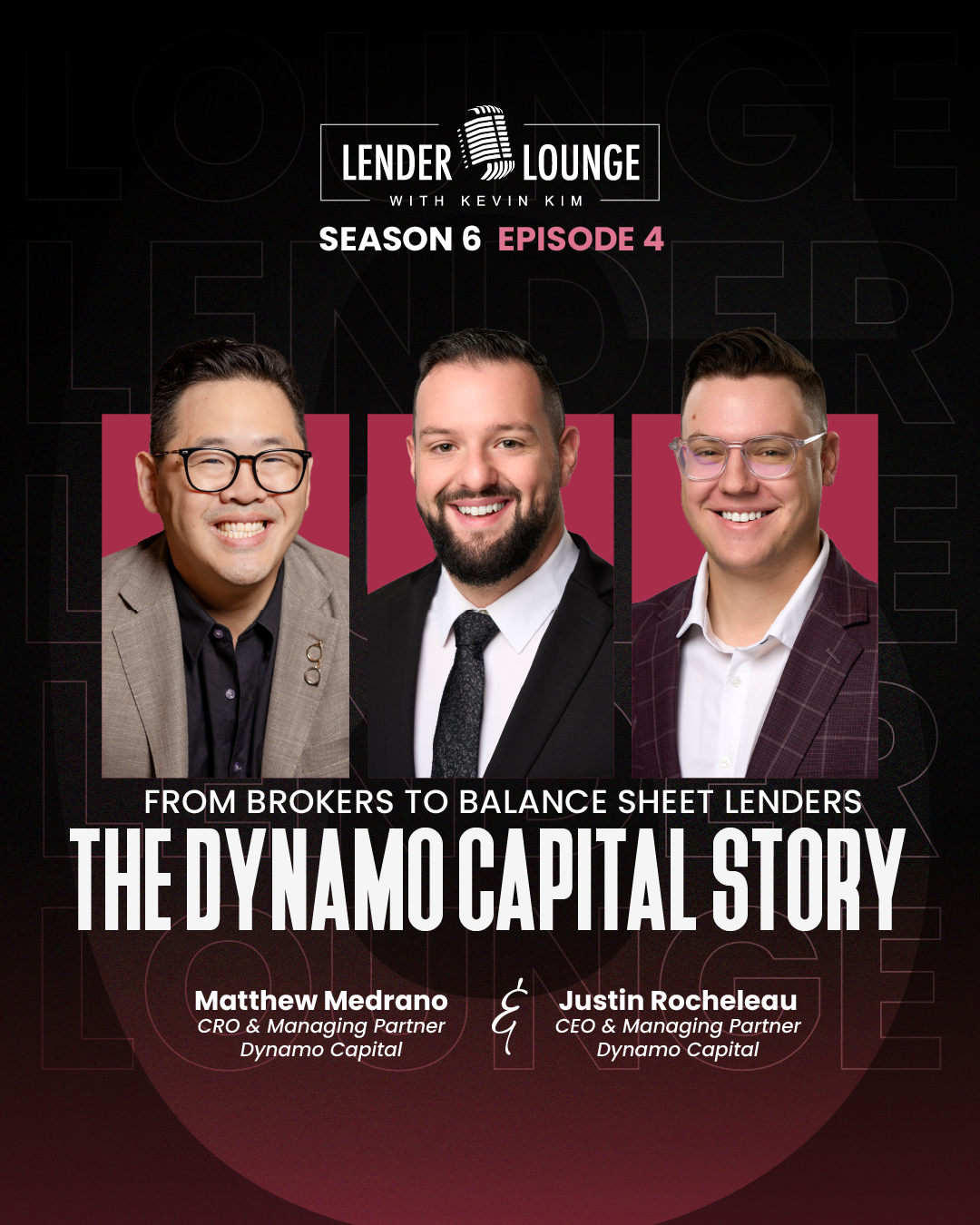


Kevin Kim: You’re listening to Lender Lounge with Kevin Kim, a podcast dedicated to helping our listeners in the private lending industry grow, improve, and streamline their business. I’m Kevin Kim, partner at Fortra Law, the nation’s largest private lending law firm. Join me as we chat with the best and brightest in private lending.
They’re eager to share their years of wisdom and best practices for lenders, brokers, borrowers, investors, and more. Subscribe to Lender Lounge on your favorite podcast platform and visit our website fortralaw.com to learn more about how we can help you scale. Check out the episode summary below for other valuable resources.
Hey, everybody. Welcome to another episode of Lender Lounge with yours truly, Kevin Kim. As you can see, we are not in the computer.
We are on location at our 2026 Las Vegas conference for FortraCon. And today we are on stage, but we’re not doing a panel, we’re doing a podcast. And we have my friends from Kansas with us and one of my favorite clients.
I love talking about you guys all the time. And I never mentioned the company name, but I think everyone knows already who I’m talking about. Those of you who don’t know Dynamo Capital, they’re going to introduce themselves in a second.
But keep a lookout for these guys. They’ve had a meteoric rise the past few years. So welcome to the pod.
Please introduce yourselves to our audience and your company and let’s get started.
Justin Rocheleau: After you, big guy.
Matt Medrano: Okay. Well, I’m Matt Medrano, co-founder of Dynamo, Chief Revenue Officer for us.
And just excited to be here. Thanks for having us, Kevin.
Justin Rocheleau: Yeah. And I’m Justin Rocheleau, co-founder and CEO. Also happy to be here.
Kevin Kim: All right. Now give us a little bit of color on the identity of Dynamo. Who are you?
What do you guys… I know, but our audience. What do you guys do?
Because clearly you’re a lender, we’re on Lender Lounge. But give us the back, give us the company elevator pitch real quick.
Matt Medrano: You keep it trim.
Justin Rocheleau: Yeah. I’m the shorter talker of the two of us, so I’ll give us the 30,000. So yeah, so we’re a balance sheet lender based out of Wichita, Kansas.
We started out in the residential mortgage sector doing your conventional conforming loans to consumers, eventually transitioned into the commercial mortgage broker space. So we were brokering loans to our contemporaries now in the space, you know, you have all that good stuff, and ultimately through 18 months of bashing our head into the wall trying to get loans to fit in the beautiful Wichita, Kansas area into those boxes became frustrated and we need to figure out how do we do better for our clientele. The only way that we could figure out how to do that was by becoming the lender.
And the only way that we could figure out how to do that was by starting a fund and raising capital and doing it ourselves. So we started the fund in September of 2023 was when we funded our first loans. We started out with a couple of hundred thousand dollars of friends and family capital and the couple nickels that me and Matt were able to rub together.
And since then, we’ve grown the company to what we feel like is a pretty good size thus far, and we’re just excited to keep rocking and rolling.
Kevin Kim: It’s a really cool story to see because Kansas has never been more on the map, in my brain at least, until you guys put it on the map. Now everyone seems to want a piece and it’s getting competitive and it’s a locals only market, it feels like.
Matt Medrano: Yeah, I mean, that’s the Midwest in general, right? I mean, that was ultimately why we started the fund when we were brokering loans. Rarely did we have an AE that covered us in the central time zone.
Maybe you had a Texan and I’m hard pressed to say that’s even, you know, it’s its own country, it feels like. You know, maybe we had somebody out of Denver that would cover, but that’s a different time zone there.
Kevin Kim:
So your best bet would be like a Chicago person.
Matt Medrano:
Yeah, really hard to explain that like our hundred thousand dollar asset in Wichita is one meaningful, not a dump that you can make good rents. Like the one percent rule still generally applies. Like a lot of those basic things were tough to convince of to a lender.
And then on top of that, of course, like, you know, coming from the residential world, we were good at fitting into a box and understanding the guidelines and whatnot, our deals fit the box. Ultimately, they just didn’t fit always the effort appetite of the lenders that we needed to work with. We continued to blow closings…
Kevin Kim: In the conventional side?
Matt Medrano: No, in the BPL side. Yeah, yeah. I mean, you know, it comes nut-cutting time at the end of the month.
And, you know, let’s use Kiavi, not Kiavi, but any of the bigger lenders, like they only can, you know, they can only get a hundred loans out for the last day of the month. Then, you know, you stack rank it. And my little thing in Wichita is much less, although it is the most important deal to my client.
And we as brokers had to go back and explain like, hey, lender didn’t do this, lender didn’t want to do this or whatever. And ultimately, we were only as good as our partners. And so instead of waiting for a better partner, we just decided to be that partner for ourselves.
Kevin Kim: And I’m noticing a trend out of the Midwest of more and more direct lenders popping up and not the legacy old school private money lenders, but much more a real going concerned business with a real team. How about, you know, your guys’ first iteration into BPL? Was it just the two of you or like just brokering deals?
Justin Rocheleau: Yeah, yeah, it certainly was. So when we first started out in the BPL space, it was him and I, we were in the office at 2:30 in the morning and we were slinging and banging until about eight o’clock in the morning when it was time to put the resi hat on. And then we’d go into the resi space and then we would sign off at five o’clock and then we would eat dinner, spend a little bit of time with our families and we work until nine, 10 o’clock at night on the rest of the BPL stuff and then we’d get rocking and rolling.
Kevin Kim: Oh, so you were juggling both at the same time.
Justin Rocheleau: We were juggling both. And so ultimately we started to bring in help, right? We, you know, we came to the, you know, we came to the dance with a 30 year fixed ESCR product and we were competing against banks and credit unions that only had 15, 20 year AMs. You know, we were the belle of the ball. And so we were inundated with volume. Um, and so nobody in Wichita could really spell BPL, right? So trying to find processing help or underwriting help or any of that stuff was just, we had to grow it from the ground up.
Um, and so we, we started, you know, we started with, with just him and I, and we brought on a processor, um, and, and, and ultimately started to grow the company around it, right? We, we started with our own dollars. We started with some participation structures with other lenders.
We were underwriting two different set of guides. We did 30 or 40 loans in our first iteration and, and, you know, and it gave us a good chance to look back and say, okay, where did these loans go totally sideways, right? What went sideways?
We had never underwritten a loan. We had never serviced a loan. We never processed draws.
We didn’t know who the vendors were, right? What do we, what do we want this to look like? Um, and so we spent the next six to eight months really looking back at these loans.
Um, we had a couple of bad eggs in there and we learned from it very quickly. Um, ultimately devised a whole new set of underwriting guidelines. Um, that really felt like, you know, something we felt really comfortable about before we started bringing in outside capital, um, in April 24 was roughly when that was.
Kevin Kim: So, so the transition into our sector, and this is not so common anymore in our sector, but was a very common story is came from conventional, came from bank, came from what I would consider a very conventional type mortgage business and jumped in. But you guys jumped in on, not into RTL first. It sounds like DSCR first.
Justin Rocheleau: It was DSCR. Yeah, it was probably more DSCR forward. The problem in Wichita and a lot of the smaller Midwestern markets is it’s dominated by mom and pop shops and lenders.
Yes. Mom and pop RTL lenders that only do RTL and they only do a hundred LTC and they’ll, they’ll dump all the money in on day one. So a lot of our contemporaries in, in Wichita and some of the other smaller markets that we’ve looked at is, you know, you know, what’s standard in our space, right?
A hundred thousand dollar loan, 50, you know, let’s say 150,000 loan, $50,000 rehab, right? You’re holding back the 50 grand, right? You’re dispersing it as, as draws are completed and requested.
Um, for a lot of these other lenders that we’re competing against, they’ll just give the client all 150,000 on day one.
Kevin Kim: Old school, private money.
Justin Rocheleau: Yes.
Kevin Kim: Country club style lending.
Justin Rocheleau: Which scares the shit out of us.
Kevin Kim: Yeah. I mean, there’s a lot of room for fraud there.
Justin Rocheleau: Yes. We trust that they’re going to put the money to the, to the right area.
Matt Medrano: Yeah.
Justin Rocheleau: Uh, and so when, when we were bringing an 85 or 90 LTC product, right? When we’re brokering loans, um, and we had, you know, the, the, the whole back, um, it was very, um, it was unpopular.
Kevin Kim: So, well, yeah. Cause you can, the local market doesn’t care who the lender is. They’re just going to, what that guy will do a full draw a hundred LTC.
Justin Rocheleau: Right.
Kevin Kim: But you guys have a more, I would call it institutional approach to when you come into it, because you’re coming from the conventional world. Like that would, no one would do that in construction lending.
Justin Rocheleau: Right.
Matt Medrano: Well, that’s the difficulty, right? You’re trying to balance kind of hard money style, rich uncle. It’s kind of how I phrase it.
Um, but on the opposite side of that scale is consistent institutional lender. That’s going to be there every day of the week.
Kevin Kim: You know, that was in 23 or 24 you said, right? That’s that, that’s the fascinating part is that like, you know, for years, I mean, I’ve been in this space now, 12, 13 years. You combine my non-law firm experience, probably 15 years and the coastal markets are the drivers of the market and they’ve always overlooked the Midwest and they’ve always viewed it as it’s too…
I mean, the nice way they put it is too provincial, right? Because they say it’s, oh, it’s all country club deals. It’s all rich uncles.
That’s how the markets are run. We can’t figure out how to deal deal there, but two local boys seems to figure it out because you guys are taking a much more, I’ll call it standard institutional approach to the space.
Matt Medrano: Well, institutional consistency, I think is the, you’re trying to like, our main job is blend, you know, rich uncle, um, that goes fast, closes quick.
Kevin Kim: That’s the number one thing in our space. No matter what you do, who you are, you’re moving quick, but be there and have the money every time.
Matt Medrano: Yeah. That’s the problem with the rich uncle. Sometimes he gets divorced.
Right. And he’s tied up. And when you go to that well and he’s not there, then you have a problem. It’s inconsistent.
Kevin Kim: Very inconsistent, very, very wishy washy. Well, you just kind of put some money to work. It’s all he’s doing.
He’s an investor at the end of the day.
Kevin Kim: Okay.
I’d like to get some more background on you guys, because I’m actually curious. We’ve talked over the years, but I actually don’t know your guys’s backgrounds, like we just talked a second ago, like I didn’t know you played football, like, like, let’s talk, like, where, where, where, where were you guys originally in residential mortgage, provincial mortgage?
Matt Medrano: Do you want me to do the the long version of the story? I can do the story.
Kevin Kim: Yeah, you can do the long version.
Matt Medrano: So we met back in would have been like post COVID. I was refinancing my house. Um, I asked my agent, hey, who’s, who’s doing refi, is it good rates, whatever.
And now it seems to be the time. Um, so I’m working with this new kid. She sent me Justin’s information.
I didn’t realize I was being a dick and I called him on a Saturday morning. Uh, I didn’t even realize like, it didn’t even occur to me that I, you know, it was just when I was free and he picks up first ring, I could hear his sons playing in the background. He takes my app, uh, great service, great rate.
All that stuff was fantastic. And he gets me a 2%. I didn’t realize he kept the whole point and spread on the backside.
Justin Rocheleau: Of course you have to do a little bit of something, you know.
Matt Medrano: Great deal, um, and at the time I was working in foundation repair, so foundation repair, so leaning walls, leaking basements, crawl spaces, repairs, and all that kind of stuff. It’s a big deal in Kansas.
We have a really bad, expansive clay soil. That’s kind of a mess. I can wax and wane about, uh, foundations.
Justin Rocheleau: Don’t get him started.
Matt Medrano: We don’t need to get going down that path. But what I did have was a lot of clients who had a lot of appointments with us because they were locked up during COVID. Um, they had time and they could bring us out and all this equity trapped in their house.
And what was at the time, a good rate for them, the threes and the fours, maybe 5%. And, um, I had access to be able to refi them through Justin. Find all this equity that they had trapped in their property, cash in on it, and then have my project paid for.
So we started a referral pipeline back and forth between each other. Um, if stuff popped up on an appraisal, you know, our company would go out and deal with it and whatnot. And, um, he had kind of always flirted with me about coming over and being a lender at the, uh, residential mortgage brokerage that he had started, JR Mortgage.
And so one day I wind up rage quitting. Um, we’re pregnant with our second at the time. My, my son is seven months old at this point.
Kevin Kim: You quit.
Matt Medrano: I quit. Good run rate.
Like the business was, but I’m, I’m claustrophobic bad back. Uh, you know, I’m in a 24 inch crawl space. I don’t like bugs.
I don’t like critters. And it’s just, I mean, all the horror stories, right?
Justin Rocheleau: Meant to be behind a desk.
Matt Medrano: I just, I’m not into that either. I’m meant to talk to people. I like that.
Um, and I was good at the foundation stuff, but I was just bored and wasn’t fulfilled all the standard things. And, um, yeah, I had a boss that was kind of do, as I say, leadership and I hate that. Um, and so I wound up rage quitting and I called him, I was on the toilet.
I called him and I was, I said, hey, I quit. I bought the license for the MLO test. Like, let me know when I start.
He goes, well, uh, wasn’t prepared for that. Um, but matter of fact, we have our grand opening tonight, just come on by. And so, yeah, there’s a picture of me and Atlas and my wife, Abby, um, at the grand opening, it was like the first time that I was becoming an LO.
Um, he had also convinced me that rates were going to be 2% for the rest of my career.
Justin Rocheleau: He likes to say this, it’s his favorite thing to say.
Matt Medrano: Cheap money, and like, there’s the economy is built, there’s no way we go back. And when I was an economist in college and he convinced me of all these things.
So, you know, like I, you know, I’m the numbers guy. So I followed him and, uh, you know, as soon as my license clears, right. Then around Thanksgiving rates start to hockey stick back up.
So I sold some of the twos and threes at the shop, but then, you know, we were quickly into the sixes and sevens and, and, and that kind of mess so, um, um, I had a lot of those clients that were working, uh, fixing flips through the foundation business. Cause like, it’s a really scary problem, the foundation businesses. Um, but you can fix it pretty affordably and there’s just a lot of spread to make.
So I worked a lot of flippers and real estate agents and whatnot. I had good book and, um, as you know, primary mortgages started to slow down. Um, you know, we needed a pivot.
He was interested in the commercial space. Um, I didn’t know heads or tails. I mean, he kind of ghost underwrote everything and, and lent for me in the beginning of everything.
And, uh, yeah, we, we spun into serving those clients.
Kevin Kim: It was a reaction though.
Justin Rocheleau: Yeah, there was, there was certainly a reaction around the same time that he was coming on board. So, uh, I’ll, I’ll back up a little bit and talk about my backers. So I started right out of, well, basically right out of high school, I started working in a wealth management firm.
Um, and as soon as I graduated college, I got all my securities licenses and was going to go, you know, be a financial planner. That was my, that was my goal. Um, I actually originally went to school to become a neurosurgeon and I sat through one semester and I said, this ain’t for me, um, not going to happen.
So I quickly pivoted to finance, went to the financial planning sector. Um, and, uh, realized it was going to be very difficult for, you know, a 20 year old kid who looks like he’s 16 to go out and convince somebody that he knew what he was doing when it comes to investing. Um, and my ex brother-in-law at the time was starting up a, uh, a mortgage branch for CrossCountry Mortgage, uh, in Wichita.
And he was like, hey, you $100,000 easy your first year, come on in. Um, and I said, you know what? That sounds like a great idea.
Um, and so I jumped ship, um, and I fell so hard on my face. It was embarrassing. Um, that, that branch ended up shutting down very shortly afterwards, but I moved over to Sierra Pacific Mortgage.
Um, and I was there for about 18 months or so. And in 2020, I started JR Mortgage group, um, which was an independent mortgage brokerage. And so I, I started that by myself, um, in 2020.
And, um, I very quickly carved out a niche and even at Sierra Pacific, I carved out a niche for just handling the files that were very difficult. Um, I was, you know, I was a newer loan officer, so I was willing to just put in the extra work to get things done. And so, yeah, it certainly was, um, when I transitioned into the broker space, um, I started leaning into that even more.
And so what that moved us towards was not QM. Um, and so, cause nobody else was doing it in our space. There was nobody in Wichita that was really brokering well.
Well, yeah, there’s just, there’s just nobody, um, you know, we were the biggest broker in the state of Kansas, which is not saying a lot. Um, but, uh, you know, we, we, we started really becoming the only person that was doing non- QM and so I was doing a lot of bank statement loans, doing P&L loans, I was doing that, you know, DSCR on the, on the resi side, which obviously is a little bit different from how we do it. Um, but a lot of those people that were coming to us were real estate investors that couldn’t qualify conforming and were coming over to me.
And so I had started to see a lot more of those clients.
Kevin Kim: So they don’t even know about BPL. So they think, okay, I gotta go get a non-QM loan.
Justin Rocheleau: Well, they were coming to me for their primary.
Kevin Kim: Oh, the primary.
Justin Rocheleau: And then they would call me.
Kevin Kim: Because they don’t have, yeah, they don’t qualify.
Justin Rocheleau: Right.
And they have got the down payment. They could put the 10, 20, you know, 10, 15, 20% down that non-QM requires.
Kevin Kim: Yeah, but their income statement is all messed up. Any business owner is going to be that way.
Justin Rocheleau: Exactly. We started to amass more of those clientels. Um, and then they would come to us and say, hey, I’m buying this flip property. I’m buying this, this commercial.
And so that was in the, he came on board right around that same time. And so our, our book kind of converged into like, okay, we have this need that we can’t solve right now. And so we started like, we’d never even heard of commercial loan work.
We’d never heard an RTL loan. We’d never heard of a DSCR loan.
Matt Medrano: We got a Scotsman’s Guide and started like flipping through.
Justin Rocheleau: We started flipping through Scotsman. That’s where we lent the most.
Kevin Kim: That’s the most old school way to do it too.
Matt Medrano: So we could give them the gen two.
Justin Rocheleau: Oh yeah. That’s fine.
Matt Medrano: So like, Wichita is a big small town, right? And, um, we had a financial advisor that was kind of in our ecosystem. That was like, hey, like, I know you guys do mortgage loans and odd debt.
I got a buddy that’s doing this project. See if you can help him out. Right.
And just hand it over. This is literally a country club deal we meet at the country club. Um, this guy’s got a really exciting project that he’s working on.
Um, and, uh, he’s, he’s asking, you know, can I get, was it $2 million deal?
Justin Rocheleau: I think it was $5 million he’s asking for.
Kevin Kim: That’s massive out there.
Matt Medrano: Biggest loan we’d ever even thought about. Yeah, Justin and I spent the commission two or three times over. Like, what are we charging on it?
We’re, we’re still thinking like in the resi world.
Kevin Kim: What was he building?
Justin Rocheleau: Well, it was a more of private equity style type of loan with some commercial real estate backing to it. We had zero business entertaining this conversation.
Matt Medrano: Well, no, I mean, we were, we were still thinking we could charge 2.75. Like we were in the resi space. We were like, okay, like, well, we could do that. And, and, um, so we, we get the loan request from him and, uh, we just take it back to the office and start going through Scotsman’s Guide.
And so like the tags of it were like green energy, uh, and fuel were like two of the big tags. Well, oh yeah. Oh yeah.
Kevin Kim: Those are really hard loans to figure out too.
Matt Medrano: Today we would, we, I mean, it’s crazy that we even thought about it. So we started going through Scotsman and, and I found like one of the first lenders, A, yeah, it was because it’s all out Arrow Funding.
So we call them up and, uh, AE like big, like the things they were looking for were like coastal, coastal project and, uh, green energy. I got everything you need. Right.
And so call him and he big times me on the phone. He goes, dude, I don’t even look at anything with less than a hundred million requests, like fuck off. I don’t want to hear from you again.
So we go back to meet with this client like a week later, say, hey, we got our ass handed to us. We have no options for you. Like we don’t have anything for you.
And we tell him this story. I’m like, let me tell you how bad it was.
And he, he, we, you know, we got laughed out of the room and we tell him that. And he goes, you can get ahold of a hundred million dollars? He goes, we can spend a hundred million dollars.
He goes, that guy’s willing to do that? And I said, I think that’s the only way he’s wanting to do it. I said, I said, I don’t think we need to stop at a hundred million.
I think you, how much do you guys need? He goes, well, the global project that we’re looking for is, you know, 250. I go, you should have led with that.
Let’s go. Let’s go call this guy back up. And I said, hey, I know you told me not to call you again.
The $5 million request I had is now $250 million. Do you like to talk now? And he goes, we’d be happy to chat.
Right. And so we chased this rabbit for every bit of six months, every bit, every bit in like some form or fashion. And it was a real deal.
And you know, it, it winds up getting some private equity from a couple of places and whatnot. And, and, uh, I mean, we looked like idiots chasing it and we had no business, but it was just like, that was just the nature of like where we were at.
Kevin Kim: Yeah. The entrepreneurial spirit is guiding you.
Justin Rocheleau: That was our first, that was our first foray, uh, in, in, into that.
Kevin Kim: Your first commercial deal that you’re brokering is a $250 million
Justin Rocheleau: Tried to brokering.
Kevin Kim: Green energy, PE deal.
Justin Rocheleau: We did not successfully close that deal to be very clear.
Matt Medrano: We don’t have any business doing that deal first of all. I tell you what, we got on call, we got on the call, we got on a call with the guy who writes the check for that, for that shop, um, and did the whole song and dance and they, they just, honestly, I think if like the sponsor would have came to terms with what they were offering, we could have closed that deal.
Um, but we were, it was structured. It was structured. So funny. It was, we had no business doing it, but, uh,
Kevin Kim: Anything with green energy is going to have multiple projects to it. Very, very complex deal.
Justin Rocheleau: We, we learned very quickly. What’s, you know, we, we chased, we chased a couple geese the first couple of times, right? Cause at that point, once again, we were the belle of the ball, right?
We were the only players in town that had any access to anything that was outside of the ordinary.
Kevin Kim: Plug for Scotsman Guide.
Justin Rocheleau: You got us, you got us to Dynamo Capital for sure.
Kevin Kim: No, but that’s interesting because like you tried though, right? And that’s, there’s so many stories of in our space where it’s like, this looks interesting. My current business is doing just whatever, not doing well.
Let’s try this. And effectively, most people in the space start out by kind of thumbing their way through it. Because there’s no map, there’s no manual.
Matt Medrano: No, I mean, certainly not. I mean, the Scotsman Guide is kind of the manual, right? Like, I mean, you just start calling and does it fit?
Does it not?
Justin Rocheleau: I mean, it’s trial by fire.
Matt Medrano: Yeah.
I mean, we got, I mean, between that and we were just talking about rock year between, you know, Private Lender Link, like that’s, we were looking for like, who will do these types of rocks, right? And then like we, we bumbled it. We like fumbled into a Kiavi account and then, you know, started amassing different, um, you know, learning their boxes.
Justin Rocheleau: (23:05 – 23:07)
And that’s relatively easy to learn.
Matt Medrano: Which is crazy now, understanding like how the paper moves around or like starting to understand how paper moves around, because we know like, oh, that’s not going to fit at Kiavi, that’s going to fit over here. And we started to map it to the residential space where like Kiavi was UWM in our head of like a paper only, don’t even think about anything less. And that’s where we start.
And then, you know, like, oh, they feel a little bit like Windsor. We can send something that’s a little off the box, out of the box here or there.
Kevin Kim: Well, let me ask you this, because that’s a very interesting statement to make, because I, on my panel at this conference we’re hosting, I’m, I’m, I’m planning on making this argument is that private lending, especially in RTL, is starting to look a lot like mortgage banking, right? Residential mortgage, not commercial mortgage banking, residential mortgage banking.
Matt Medrano: That’s generally the value prop of Dynamo, you have a thought on that.
Justin Rocheleau: Yeah, I mean, I think, I think it kind of has to be.
Kevin Kim: And what you were saying is you were thinking like a mortgage banker, like, you know, like,
Justin Rocheleau: I think to an extent, right, as more institutional capital is flowing into the space. And at this point, it’s just like, it feels like, you know better than anybody. I mean, it just feels like they’re just trying to push as much money into this space as possible.
Kevin Kim: Right. But people aren’t, what used to be, I’m going to do the loan, and I’m going to figure out a way to get it done. And then I’ll, if I need liquidity, I’ll sell it.
And if it doesn’t fit my parameters, then I’ll broker it out. Right. Is not the driving force anymore.
Now it’s more like, okay, I’ve got these loans. There’s always capital everywhere. And I know all these different boxes.
And I’m going to wholesale it out. And it seems like it looks very much like my friend’s residential business and conventional business, non-QM business, right. And they’re running off of line.
A lot of guys are running off of lines. They don’t fund any more loan. These days, you don’t have to fund your own loans anymore.
Matt Medrano: I wish you would have told us that when we started this. You kind of fucked us too.
Justin Rocheleau: I mean, we started like, we didn’t know, we didn’t realize until it was the first Fortra Conference we ever went to, which was April of 2024. We learned at that conference that there were people in our industry that bought loans.
Matt Medrano: Didn’t exist to us.
Kevin Kim: Right. And but you were used to it though, because of the conventional.
Matt Medrano: No, we didn’t know this existed at all.
Justin Rocheleau: We figured our understanding was, okay, if we’re going to be, if we’re going to be a lender, if we’re going to be Dynamo Capital, if we’re doing a hundred thousand dollar loan, we need a hundred thousand dollars and we’re going to have to hold that loan until it, until it pays off. We learned, we learned there that, oh, there’s people that buy these loans.
Kevin Kim: Right. That’s the difference between, I would say the conventional market isn’t conventional. It’s, you know, it’s UWM trading with some big bank versus in our sector.
It’s, you are the UWM in a lot of ways and you’re trading with the investors out there who are also trading with some big bank.
Justin Rocheleau: Right.
Kevin Kim: So, but at the same time, let’s, let’s, let’s unpack what you just said though, cause that’s an interesting way to think about it. Cause I, I am still not convinced that we’re headed in this direction because the loans are never as straightforward as they are unconventional or non-QM. It’s not that cookie cutter.
Matt Medrano: Well, there’s less like the scrutiny in the residential side is way higher, way higher. And so, yeah, you still can get through it. The difference in when we were brokering in BPL, we figured out that logos were just kind of logos and then like the guides were the same.
If you’re going to have guides that are copy and paste, at least change the font. Right. And like we can start to see trend of like, oh, Lender X, Y, and Z are all the same cause they’re all going to the same place.
But we didn’t realize that we just felt like they were all kind of the same family.
Kevin Kim: So once you get into an industry event, you’re starting to discover, oh, there’s cap, there’s, there’s capital behind these guys.
Matt Medrano: We were texting the entire conference and we had maybe 72 bullet points, I think. And like, I still have the document somewhere of like, there were questions like, what are we, are we a lender or are we a fund? We didn’t know we, I was like, like, nobody’s talking about the fund.
Justin Rocheleau: Yeah. We were having these like esoteric discussions. No, it didn’t occur to us that everybody, that everybody that wasn’t, everybody that was a lender was also a fund.
Kevin Kim: The fund is a piece, a piece to the puzzle. Yeah. Yeah.
It’s not, it’s not the primary. Yeah. Like a hedge fund.
Like hedge fund is hedge fund. Like you’re, you’re a fund, but in our world, we are lenders first. Right.
And that fund is just there to provide capital to your business.
Matt Medrano: It’s been good for us though, because it really taught us to, we built the fund on the assumption that we have to hold every dollar and that every loan that we do has to live on our balance sheet. And so we see leverage as cherry on top, as opposed to making decisions about a loan based on whether we can leverage it or not.
Justin Rocheleau: Right.
Kevin Kim: And it puts you in a better economic position, surely.
Justin Rocheleau: Well, certainly. I mean, we, you know, we built this business in the first place as well. I mean, even to the way that we structured our fund, which I mean, we’ve talked about plenty of times.
I think you tried to talk us out of it several times. You know, we’ve, we’ve structured our fund very differently compared to, to, to other people. And it’s allowed us A, raise plenty of, you know, a good amount of money, you know, via the, you know, even being an emerging fund manager, but it’s allowed us to align incentives all the way down.
So, you know, the manager is able to participate in much more of the interest economics where the LP is also able to participate in a lot more of the fee economics. And so it’s allowed us to be very dynamic in the way that we operate, you know, we’ve never sold an RTL loan. Ever.
And we don’t necessarily intend to. Now we have good relationships.
Kevin Kim: Looking back on it, though, right. So if you were now with what you know, would you have started the fund?
Matt Medrano: Oh, well, that’s a loaded question.
Justin Rocheleau: No, it’s hard. It’s a hard, it’s a hard question to answer. I think we would delay it. I think it would have delayed the starting of the fund.
Kevin Kim: And this is this is anti my it’s against my own interests because I have to talk to people out doing funds all the time.
Matt Medrano: Yeah.
Kevin Kim: All right.
And sometimes I talk, I talk them out of it just by virtue of explaining how the market is. But I’m also like making sure they understand there is a virtue to have it.
Matt Medrano: Well, we I’ll tell you what, we certainly wouldn’t have been in this position had we not started with you for one, I mean, to get super deep here. I mean, you could have told us that we could have named it differently. Have I addressed this with you?
Justin Rocheleau: No, I think I think I think we have.
Kevin Kim: Oh, yeah.
Matt Medrano: A while ago.
Justin Rocheleau: So we didn’t know like that’s how we’ve had to address that a couple of times.
Matt Medrano: When we’re getting these new lines of credit.
Justin Rocheleau: Yeah, they laugh at us hard on that.
Kevin Kim: But you’re not the only one.
Matt Medrano: We didn’t know.
Kevin Kim: Multiple names of the business.
Matt Medrano: But we didn’t know. And that’s just kind of like speaks to like we were complete outsiders and we’ve never approached this business like an insider. You know, when we were doing our first deal, our first deal outside of our walls where we needed liquidity and we thought we were table funding and we didn’t and we thought we were working with an end lender.
We didn’t realize we were getting double and triple underwritten. As they were moving along the chain, we had no idea. And so it was very confusing to us.
And it was became pretty clear that like the general jumping off point is more Wall Street. And then I’ll get into real estate because I can make spread where we started in real estate and then realize we can apply some Wall Street techniques. And I’m using Wall Street broadly, but you get the point.
We can use some more big boy institutional techniques to add leverage and power to what we’re doing. And that’s how we’ve gone. And I’m glad that we started the way we did to the point about would we have started the fund?
I mean, there were some dark days at the beginning with our participation partner that pulled out on us.
Kevin Kim: Raising money is hard.
Matt Medrano: We had a participation partner when we first started this. And it was a 90-10 split. And within the first month, they just up and dropped us.
They had a liquidity event. And we were like, oh, like, what do we do now? And so there were days I’m laying on his office floor and we’re just scrolling through phones like, I’ll call that person and just ask for a million dollars.
And the conversation would kind of go well until we asked, they asked, like, how quickly we needed it. Yeah, you get it by Friday.
Justin Rocheleau: Friday would be great.
I can float till Monday.
Matt Medrano: Right. And they go, whoa, hold on, you know, and we didn’t drop any of those fundings.
But it kind of speaks to Wichita in general and the value prop of working in a local market that you can explain. But yeah, man, it was some of the headaches that we started with, whether they were self-induced or not, I really couldn’t tell you. I mean, it was hard to restart that figure.
Kevin Kim: I call it like figuring out it’s a growing pains. It’s like just kind of figuring out pains. And you could be a seasoned professional and been doing this for 20 years and still have to reevaluate midstream or restructure midstream just because this market is incredibly dynamic, like even in the past year.
I mean, we talked about DSCR. I mean, DSCR has shot through the roof, but RTL is having its troubles and people are what used to be, okay, I’m going to go find new capital partners to sell loans to, that’s drying up. And so there’s a lot more complications to business every year.
And so it isn’t really, I don’t necessarily put that to any detriment. Everyone’s just trying to figure out a better mousetrap. So I have fund managers that every kind of like six to eight months, they want to make sure they have a good feel on things.
They’re just calling all their industry relationships to make sure they have a good pulse on things. So don’t feel like, I mean, don’t know, that experience puts you guys where you are today, for sure.
Justin Rocheleau: Well, we had to, I mean, we were forced to grow, you know, five years in five weeks. You know, we had to, we had to figure it out very, very quickly. We learned at that point.
Kevin Kim: Why?
Justin Rocheleau: Because we started the fund, right, to be able to be discretionary, to not have to be concerned with what’s happening outside of our walls. (32:48) And we thought that we had that, right, with the partner that we had, right. But we very quickly realized that the only way that we’re ever going to be able to be discretionary and the only way that we’re ever going to be able to be completely uninfluenced by what’s happening outside of our walls is by building our own balance sheet and being reliant on nobody else.
That’s why we’ve chosen not to sell loans. Because I don’t want to worry about if this buyer or this buyer or this buyer wants to change their box or wants to pull out of the market or has too much of an allocation here or wherever that may be.
Kevin Kim: So when you were discovering the triple underwrite, that informed this decision then.
Matt Medrano: Well, that’s after. So, I mean, to just like zero into what he’s saying, when we were brokering loans, we had we were at the will of Kiavi, Lima One, LendingOne, whatever, and we didn’t like being out of control in that case. We weren’t the final buck.
When we started the fund, that was the goal was to make our own decisions, be autonomous. And then with that capital partner, we were underwriting their box. Ultimately had to go through them.
We were using their back office and we were essentially just like…
Kevin Kim: That’s the hard part of having one big investor. I have many clients that have that problem.
Matt Medrano: We were direct brokering is all it was. Those those loans on our books have performed the worst by by far.
Kevin Kim: Well, and you’re letting him dictate what the business should look like.
Matt Medrano: Yeah. And it was a place that we had brokered loans to in the past and that we had a relationship with. But yeah, we were just ultimately we got dropped.
And the best thing for us was that we got dropped and we had to go out and figure it out.
Kevin Kim: So that the the age old American story of wanting independence really important in our space. I mean, even the big shops ultimately, they have a need to be independent so they don’t let certain things dictate how they like, whatever capital might say. But a lot of times they’re not going to let it dictate to an extreme degree.
So we all joke that, you know, they’re run by those shops. But in reality, they’re not. And there’s a lot of discretion being left to the principles.
Matt Medrano: Well, it’s a tight fight. Every every day you have to choose to not like to. And that’s certainly a harder path.
And so when we probably a year ago when we started like some of the lines of credit facilities and those those conversations started to come up, it was, you know, we had to make conscious choices every day that we weren’t going to just fall to that box and that we were going to continue to be discretionary and whatnot. And I think it was. It was the last I think it was a year ago.
The friends at Rain City were on one of your panels. And as we were starting the lines of credit conversation and all that stuff and we were talking to all the vendors out there and then we’d come back and forth. He said they have a heavy balance sheet and like Justin I both snap to each other and like whatever that is.
I don’t know how much that is. We got to have a heavy balance sheet. We like that was like a like a really big fork in our road where like we could have went down this.
We’re going to start lines.
Justin Rocheleau: We were we were teetering. We were teetering on the idea of starting to participate more in the secondary market.
Matt Medrano: Yeah, yeah. Why are we doing all this? It’s so much harder, right?
Justin Rocheleau: There’s, you know, it’s obviously, you know, if if if it goes right and you do it right, it’s very profitable and you can do it well. But you’re also at the whim of somebody else.
Kevin Kim: But this is without you having gone through what a lot of our people have gone through. Like those people have been in that situation where they’ve been through this like the post COVID was a or the rate hikes were a good example. Right now, arguably, it’s kind of you know, it’s the end of March 2026.
There’s a lot of headwinds in in RTL. And so, you know, institutions are tightening and pulling ranks. So.
You guys made that choice without being burned like these guys have. That’s one of those things that I commend you guys on because everyone goes down this path of discretionary because they they were heavy, heavy, secondary and then, you know, post COVID happens and all the all the buyers all of a sudden pull rank and they, you know, a bit of Maddock here, they slow down the business because of concerns. Right.
And so like that’s what leads them down that path. But you guys said, no, no, no, I’m going to look at my I’m going to look at people we look up to in the space and try to learn from them.
Matt Medrano: Oh, we try to learn every lesson without having to learn ourselves.
Kevin Kim: That’s something that’s very rare in our space, I would say, because I I hate to say it, but in real estate, especially a lot of folks have big egos and they don’t like the idea. They’d rather put others down than be humble enough to learn from them. That’s a really hard thing to do.
Matt Medrano: Well, it takes so much ego to want to do this and sign up. I mean, you know, all the personal guarantees and like a lot of risk. I mean, we’ve got, you know, however many millions of dollars in the fund that we’re responsible for.
Justin Rocheleau: Right.
Matt Medrano: Right. And that takes a level of ego.
But ultimately, successfully running our shop requires no ego. Right. I mean we have to have…
Justin Rocheleau: We have to be willing to be wrong and to change direction and to ultimately take feedback from people inside of our walls and outside of our walls. Right. If clients are telling us, hey, this is not going well.
We need to listen to that and we need to understand why that is.
Kevin Kim: Right. And it’s an incredibly mature approach to a relatively new business. Right.
You guys have been around now. It’s been with four four years, five years. We’re on it.
Justin Rocheleau: (38:00 – 38:01)
We’re in our third year.
Kevin Kim: Third year. Third year.
So, yeah.
Matt Medrano: And you see it in our hiring practice. Right. We’re able to get people that haven’t had a voice at a bigger shop who have phenomenal ideas, have seen, you know, the institutional lessons play out in front of them and go, I saw this, but I wanted to do something else, but like I could never get my voice out there.
And, you know, they have a home to be able to one teach us those lessons. I mean, our institutional knowledge as a company has increased seismically over where it was in the past. And that’s only a testament to me and Justin wanting to grow and add other folks that we can learn lessons from and and ultimately step out of the way and say, no, no, Ross, you certainly know more about capital markets than I do.
You tell me how it should go. Right. And then we’ll set.
Ultimately, all Justin and I are responsible for is one, making sure that the fund is full and that we’re bringing in capital and all those things and everything runs. But ultimately, step out of the way and let the Rosses and all their individual departments kind of run and do their thing and then set overall direction. And then just get out of the way.
Right.
Kevin Kim: Well, let’s let’s talk about this. You guys, I mean, we know we started with just you two. So you and you brought him on.
Two guys. And then and I remember when you guys came back to the next show we held after we got the fund ready to go and all that stuff, you know, you had brought some team members on. But like how big is now?
How big is the team?
Justin Rocheleau: We’re forty five humans, about forty five people on the staff.
Matt Medrano: When we moved to our new building in 2024, Thanksgiving of twenty four.
Justin Rocheleau: Yeah. Thanksgiving twenty four. Well, January of twenty January twenty five is when we had seven humans, including us.
Kevin Kim: Right. Like loan production fund is primary driver, but there’s still some other loans that are not going in the fund? Are we doing all loans go into the fund?
Justin Rocheleau: We completely axed out every other line of business that we do. So we don’t broker loans anymore. We don’t do every single loan that that that, well me and Matt are completely outside of the loan ecosystem at this point.
Right. Our job is to help set direction. And there’s a conflict of interest if we’re the one, the originator on a given loan, obviously.
So we stay completely out of the way. But every single loan that we do is inside the fund. That’s RTL, it’s DSCR.
It’s anything that touches our world.
Kevin Kim: And DSCR goes out the house, I guess, because you got you get balance sheet.
Justin Rocheleau: Yeah, we don’t balance sheet it. Yeah, we close the fund. We delegate it. We do it all in-house.
Kevin Kim: Dynamically speaking, it’s just hugely quickly growing. I don’t see companies add that many humans that fast. We did, actually.
We doubled in size almost in a couple in a year or two, and it hurt. It hurt. We learned so many lessons.
Justin Rocheleau: Oh, absolutely.
Kevin Kim: And so like you talk about the past three years now growing as fast as you guys have. What are you guys working on right now to optimize and improve? Are you to say, hey, we’re going to stop doing this because this is getting kind of a little bit too much?
Matt Medrano: Look, the biggest difficulty is finding private lending talent in Wichita, Kansas.
Kevin Kim: Right.
Matt Medrano: There’s a ton of talent. There’s a ton of talent.
Kevin Kim: No, I’ll meet developers from that part of the country, lenders from that part of the country, and they all know who you guys are. Because, yeah, you’re right. There’s not a lot of real going concern private lenders out there.
It’s a few, I mean, but not headquartered.
Matt Medrano: No, and we’ve, you know, like our Wichita staff, almost all of them are from outside the industry. And that’s, I think, what set us apart. When a client calls servicing, they’re not calling, you know, they’re not calling FCI or they’re calling directly to us.
They’re calling to the same servicer that they always work with who understand service at the end of the day. Most of them worked at restaurants or had some other business that they were in outside of mortgages and lending. And half of them don’t even realize they work at a fund.
I mean, certainly we don’t feel like that when you’re in office and the way we operate is not like that. But, you know, the biggest challenge we’ve had is how do we grow institutional knowledge and understanding locally and manage the culture. And one of the biggest things for Dynamo is our culture and how it feels.
And I think a lot of companies say they focus on culture. But we try to make that the main driver of everything we do is, you know, more than just…
Kevin Kim: But now you have staff that’s not in.
Matt Medrano: Yeah, and it’s translated really well. Like, when we first started, we had a remote contingent and we did it so poorly. They didn’t have support.
We didn’t know what we were doing. It was a disaster. And it went poorly for everybody involved.
Kevin Kim: So you just said yes to hiring someone that was remote without the back office to support it.
Matt Medrano: Yeah, we had a little pod in North Dakota from some… or South Dakota from guys that we worked with in the resi space prior. And it felt like it was we’re great on paper, but we certainly didn’t know how to run the business the way we do now, how to push culture that way.
Kevin Kim: So hard.
Matt Medrano: And our culture is so defined now.
Kevin Kim: So hard.
Matt Medrano: But you can see it translate now. You can see it translate now in all our remotes.
Justin Rocheleau: Yeah, we’ve got probably…
I think about 40% of our staff is remote. And I don’t feel that I’m any farther away from those people than I am from the people at HQ.
Kevin Kim: That’s the feeling. That’s what you want.
Justin Rocheleau: Exactly. Now, there’s…
Kevin Kim: It’s…
Justin Rocheleau: And we try and push really hard getting people to HQ often. We try to make everybody’s first week in office. And so let’s get entrenched with the people, right?
Let’s understand the office lingo and the culture and what we’re doing here and why we’re doing it.
Matt Medrano: I mean, we’re flying them all in for like a little mini conference so everybody can have a shared experience. It’s so hard to just live on Zoom and Teams. And, you know, I mean, you can…
What I’ve been really excited about is that even though I do interface with Tyra through a Teams call all the time, I still feel like I know her, right? And I look forward to having her in person, but it’s still, you know, you really do get to know these people in a meaningful way. And, you know, whether it’s we do like a purpose-built window of story time in the office where we tell like an old Dynamo story or something that, you know, just is a shared experience for everybody to have.
I think it goes a long way. And, yeah, I mean, it’s a… We’re going to shut down for two days and bring everybody in and…
Kevin Kim: That’s beautiful.
Matt Medrano: Talk through it and, you know…
Kevin Kim: And companies much larger than you guys don’t do that. And there are some companies that are much larger than you guys that do do that. And you can tell the difference.
Justin Rocheleau: Yeah, sure.
Kevin Kim: When their teams are together at a show, they’re so much more cohesive.
Matt Medrano: Sure.
Justin Rocheleau: Right.
Kevin Kim: (All right. So I want to ask another kind of set of questions more along kind of where where’s Dynamo headed now. All right.
So you guys have grown dramatically fast. You guys, I’m guessing you’ve added a bunch of markets to your book, right?
Justin Rocheleau: We’ve started to expand into new markets.
Kevin Kim: So like where are we headed… We’re just in the beginning of 2026. You know, the market’s kind of weird.
It’s kind of weird. And you’re kind of bobbing and weaving out there. Although Midwest is still pretty solid, it seems like.
But…
Justin Rocheleau: I don’t know if we have wood on this stage.
Kevin Kim: But like, where are you?
What’s the future look like for you guys? And what are you guys excited about?
Justin Rocheleau: You know, our directive internally is not to make loans. Our directive internally is to make good loans, to make good common sense decisions. And if that means that there’s no loans to do, that means there’s no loans to do.
We’ve told that to our investors. We’ve told that to our LOs. That’s why we compensate our LOs the way we do.
Right. We don’t pay a commission because we don’t want a negative incentive between the LO and the company. And so, you know, we obviously…
We’ve been blessed enough at this point to not necessarily have any issues in our portfolio, right? Of course, we have, you know, we’ve got your standard, you know, the DQ and defaults, right? Obviously it happens, right?
And if you don’t, then you’re lying. But we want to start to explore new geographies in a more meaningful way, right? And for us, that is boots on the ground, deep in the market, right?
I don’t want to work with every LO or every flipper builder in a given market. That’s not our goal. We’re not throwing out a big net because we don’t have a directive.
We don’t have unending money. We also don’t have a directive to go out and do every loan out there. Let’s go find five to 10 killers that really know what they’re doing.
And let’s just pour all of our resources into those guys. And so for us, right, it’s continuing to, you know, continue to dominate the Midwest. We have a presence in the Denver market thus far.
We have an LO based in Denver. And we’ve been doing…
Kevin Kim: That’s smart. You cannot break into Colorado without boots on the ground. It’s impossible.
Justin Rocheleau: And a lot of the markets that we are moving into, and really every market to an extent, right, want somebody there, right? You have to have somebody there.
Matt Medrano: I don’t think your comment is specific to Denver or Colorado in general.
Kevin Kim: I think you can pull off LA. California you can pull off. New York, you can pull off.
Florida, Miami you can pull off. Those big coastal markets you can pull off.
Matt Medrano: Right. And that’s not even for us. I mean, that’s not that’s not where.
But in the Midwest, you got to have somebody.
Justin Rocheleau: You know, to an extent, as a as a fund manager, we have a fiduciary responsibility to our investors to know what we’re doing with their capital. And how can I how can I say that I know exactly what’s going on if I’m doing loans in, you know, in Boise, Idaho? I don’t know that market.
I don’t know anything that’s going on, right? I don’t know the players, right? But when we’re loaning in Denver, we’re loaning in Wichita, we’re loaning in Oklahoma City or Kansas City, right?
We know who the top five or ten players are. We know how to right, if a loan goes sideways, when a loan goes sideways, right? Us being so entrenched in those markets helps us be able to dispose of assets much more quickly because we have relationships in those markets and we can start, you know, we can give sweetheart deals to our other borrowers in those markets.
And so for 26, you know, our focus is to continue to make good loans and bring on good people. And ultimately volume will come from that. What that is, we don’t know yet, right?
But, you know, we’ll keep moving eastwards from, you know, from the Midwest is probably our main directive. You know, moving west as there’s some licensing headaches and we’re not ready to face that challenge yet.
Kevin Kim: Do it when you have to. But I agree with that mentality.
Justin Rocheleau: And at some point, will we probably, right? But let’s continue to, you know, we’re big believers in hitting singles and doubles, right? We don’t want to hit grand slams, right? Now, if you look…
Kevin Kim: No 250 million dollar PE loans?
Justin Rocheleau: Look, if it’s there, let’s do it. I think it’s funny because we say that, but our average loan in our portfolio is like 800,000, which is crazy.
Kevin Kim: Which is also an interesting fact, because that was not the case when you guys first started.
Justin Rocheleau: No, it was much lower.
Kevin Kim: Values have just skyrocketed.
Justin Rocheleau: Well, it’s not necessarily even values. (48:18) It’s adding, I mean, adding the adding the Boulder market in Denver, we loan mostly in Boulder, which is higher price market, obviously, so our average loan size out there is a little over a million dollars. But in Wichita, what we tend to see, the home values are fairly low, right?
The good the good flip market in Wichita is probably seventy five to two hundred fifty thousand is probably the price point. A lot of our borrowers are buying multiple assets at the same time. And so we’re bundling loans like crazy.
And so our average loan size is eight hundred thirty thousand. But the average unit is probably closer to 250 or three hundred thousand, give or take, because we’re not we don’t have cross collateralization issues internally. Right.
We can do that. It’s common sense. Operationally, it makes sense.
Matt Medrano: We see a lot of big packs that get traded.
Justin Rocheleau: We do a lot of we’re doing a lot of construction as well and also spread across diversification just by virtual value.
Kevin Kim: Yeah, it’s great.
Justin Rocheleau: And especially when we’re, you know, doing more ground up construction, which has been a big push, I feel like recently from not just ourselves, but I feel like a lot of our counterparties…
Kevin Kim:
You can make sure they’re building them right, too.
Matt Medrano: Yeah, I used to fix them. I know about them.
Kevin Kim: I mean, it’s just so many stories of just bad builders and lenders, they don’t have any experience.
Matt Medrano: Yeah, yeah. No, that’s I mean, I talk about this a lot, like, you know, when we were brokering, it was always difficult to get the GC approved that was like breaking out and doing it on his own because he built a bunch of houses for his clients, but he didn’t have experience in the like, as an investor in the but like that guy knows how to build a house a hell of a lot better than the investor did. Right.
But like the archaic structure that is the lending world that we were living in, I couldn’t, he wasn’t on any HUDs. Yeah, I couldn’t prove that he entered and exited a property. And so you’d have to give him like reduced rates or you couldn’t do it or whatever the the red tape was.
I submit for you that that was the best bar we could have had. And that’s who we’ve put our our our dollars behind. And so I think one of the big things that my directive for for 26 is to not conform kind of to the like average standard that, you know, a lot of like the third parties and the faculty the facilities want you to be because it looks like everywhere else.
I think that’s like the actual value prop of us is that we don’t look like everyone else. Right. And then we don’t operate.
And we make we don’t make crazy decisions. We make common sense decisions like why wouldn’t I give this GC who’s built a thousand homes credit just because he did it for somebody else that doesn’t make sense. We should give him 100% of the credit for it.
And we should give him really favorable terms because the man knows now does he know how to submit a loan request? No, he doesn’t. And my team can work through that.
Does he know how to submit a draw request? Probably not in the way that like you’re expecting him to go through. And does he know what Sitewire is?
No, he doesn’t. No free ads. But can he can he can he tell me what’s going on in his build if I call him?
Absolutely. Right. We’ll work with those guys all day and we can train them up on how to be a client.
They don’t have to be a good client. They just got to be a good builder, a good investor, a good flipper. We’ll make them good clients.
Kevin Kim: So we joke about this a lot all the time privately. We’re trying to keep it quiet about what’s going on in Kansas because that middle part of America is, to my in my opinion, is growing fast. A lot of getting a lot of attention.
Ohio, Indiana has been kind of a challenging market in the Midwest. Chicago is basically run by Renovo. So it’s very hard to break in.
So like that middle part and also kind of the deep south is starting to become a lot more popular. And but at the same time, very hard for, you know, the bigger shops to break into. What what what what is it that keeps it so kind of insulated?
Matt Medrano: Midwesterners want to work with Midwesterners.
Kevin Kim: That’s a thing.
Matt Medrano: Again, it’s core. Right.
Kevin Kim: Like I can’t tell you how many times I’ve signed a client, purely just because I’m from Wisconsin.
Matt Medrano: Yeah, yeah. You don’t like I don’t want to answer a phone number that’s coming from a different area code.
Kevin Kim: Yeah.
Matt Medrano: So that’s a really I mean, there’s obviously ways to get around that. But you get the point that you know, we know our own. Yeah, we know like you’re faking the funk.
Kevin Kim: Yeah.
Matt Medrano: And you know, when we say, for example, we’re getting this DSCR business now, right? If we say something on the front side of a deal with the margin that we want, but something changes in the loan, whether on the client side or on our side or whatever it is, something material and pricing is affected.
We will still do that loan at the original price that we did barring like the ability to do it. And we did a loan for that cost us money because we felt like that was the right thing for us to do. That’s a Midwestern value that will hold that I can’t say that you’ll see at other shops.
I can tell you that when we were brokering loans, we certainly had to go back and call the client and say that they they repriced us at the end of it or like the DSCR changed slightly and so the rate deteriorated like that’s all fair per the rate sheet. It’s totally fair.
Kevin Kim:
Yeah, but from a value standpoint, well, it’s a hard pill to swallow.
Matt Medrano: As a client, as a client, well, I chose you because you could give me seven. Now you’re giving me seven and a half and it’s two days before we close. I really don’t have any other options, man, I got to go with you.
And so, you know, you’re only as good as your partner in that case, right? And so we refuse. We had to deliver that message so many times.
We refuse to have our LOs do it, our AEs do it. We won’t do it ourselves. If it was something that we messed up, we’re absolutely going to do it for a loss and that’s just how it’s going to go.
If it was something that the client did, I think it’s on the LO and the AE to go, hey, this was sized wrong, mostly because of your information. You told me it was going to rent for $1,000. It rents for $700, right?
That’s usually the story, right? But you know what? We’re going to take care of you on this one because us going and getting the 20 basis points that we lost in pricing is not worth the next two or three deals because we now have a sticky borrower that’s very happy with what we did.
Yeah, no, it’s so important. And you get too lost in the, I’m chasing these few basis points here. We’re losing out here.
No, there’s, could we charge our clients more? There’s no competition in Wichita. We’re a 30 year fixed versus a 20, 25 year AM at the same rate.
We could charge a significantly higher rate, make really good margins on it and be much happier financially, me and Justin. That doesn’t feel good to us. It doesn’t feel right.
We have the opportunity. When we grew up in the UWM, like what was it? Game on price?
Yeah, game on. Game on price, are you familiar?
Kevin Kim: No.
Matt Medrano: You can do this for me.
Kevin Kim: I have no conventional mortgage background.
Justin Rocheleau: In 2022, so UWM is the biggest wholesale lender in the country.
They’ve been for the last several years. But in 2022, right? A lot of other mortgage companies were coming to the wholesale space.
And so they were pricing, you know, very heavily discounted compared to UWM. UWM has always been known, obviously, for a great process. And, you know, one day, Mat Ishbia came, you know, did his, I don’t know, yeah.
He came on his daily briefing that he does for all the people that gets blasted out. And they slashed margins, basically 200 basis points overnight. And just choked the living, just the life out of the competition and put a lot of wholesale, other wholesale lenders out of business.
Just because they could, right? They knew that their process was so superior to everybody else’s, that even when they slowly started working their margins back up, those clients were gonna stick around. Those brokers were gonna stick around.
And, you know, that’s, to an extent, kind of what we’ve done as well. Like, could we make more money? Sure, right?
Could we charge more? Could we do more, you know? But ultimately, we feel like, like Matt said, like the relationship with the client, doing the best we possibly can for the clients is gonna earn us the most amount over the long run.
And those relationships are just completely invaluable.
Kevin Kim: Well, we talked about going into 2026. I guess one thing I wanna, you guys are young guys. We’re gonna get a little, how old are you guys actually?
I don’t know how exactly how old you guys are.
Matt Medrano: Yeah, I’ve got a couple more weeks before.
Justin Rocheleau: I’m 29.
Kevin Kim: You’re 29.
Matt Medrano: 30.
Kevin Kim: You’re 30. You’re young guys. And your entrepreneurial spirit is driving the business.
You’re growing fast. You have young kids.
Justin Rocheleau: Yeah.
Matt Medrano: Yeah.
Kevin Kim: We talked about this privately. You guys have young kids.
I have young kids. How are you balancing all this right now? It’s just insanity.
You’re running life in your hands.
Matt Medrano: This is a team, without question.
Justin Rocheleau: That’s why I’ve got 45 frickin’ people.
Matt Medrano: Yeah, it’s a team without question, right? I mean, we tried to run this operation on our own. We brought in our first operational person.
Rachel is now our COO. She was, you guys know these mortgages aren’t even getting signed. No, I thought Tidal did it.
I didn’t know we had to check. I thought, why are we paying Tidal? Why are they paying Tidal?
I thought this happened with, oh my God, we’re the last people that should be running a shop on our own, right? Then it takes a village. And I can speak for myself and I know the same is true for him.
Like our wives are the key to that being able to, we don’t balance it. Like they balance it for us, right? And then we get to come in.
But I mean, we’ve prioritized, we’re out at five, right? That’s a big deal for us. We work our ass off between eight to five.
The times outside of that are for our kids. So it’s another kind of UWM lesson that we got. Like very radical prioritization of things.
I hate to say it in front of him. I wouldn’t want to run the shop with anybody else. It’s tough to do what we’re doing.
It’s a lot of pressure and a lot of the weight of the business kind of shows up every now and then. He’s the only other person that gets what I’m going through. And I’m the only other one that gets what he’s going through.
And so a lot of those things, we always say that we’re partners, but we have to explain what kind of partner we are, right? Because our partnership is not always 50-50, right? There’s a lot of this that I carry.
There’s a lot of that that he carries. And the good news is that neither of us are really interested in the other one’s job. And so we get to, he gets to do the numbers.
I get to do the talking. We’re good with that split and that makes sense. So I think the honesty is that neither of us independently balance any of it.
Collectively, we balance it with the team, with our wives, with our kids. I mean, my kids, it was the worst. I know you did the same goodbyes as I did this morning when we came out here.
It’s miserable. It’s miserable. And you go like, well, what’s the point?
We’re very lucky. We spend a lot more time than I think our contemporaries can with their kids. Just in Wichita, I can be home in 15 minutes, right?
I can’t imagine what your commute is, getting back to your kids.
Kevin Kim: Yeah, about 30 minutes. Yeah, yeah.
Matt Medrano: It could have been more dramatic.
Kevin Kim: It used to be an hour and a half.
Matt Medrano: Yeah, I mean, so we’re very lucky in kind of where we’ve chosen. We didn’t choose to do anything that we’ve done here in the fund. We didn’t choose to set the fund up the way we did.
On purpose, right? We set it up the way we did, kind of on accident and it worked out. We happened to be in Wichita on accident.
That worked out, right? So we’ve been very lucky that everything’s kind of lined up the way it has. And our duty now is just continue to say yes to it and make the next right choice.
Kevin Kim: So where can our audience find you guys? How can they get a hold of you guys?
Matt Medrano: Yeah, dynamocapital.com. A lot of different places to get there with us, whether it’s as an investor, as a client, submit a request there. Matthew@DynamoCapital, Justin@DynamoCapital for us directly.
We didn’t do anything fancy there. So we’re always reachable. We’re happy to chat and go from there.
Kevin Kim: I love it. Well, that’s all the time we have for this episode, thank you so much for being on the show. This was really fun.
We got to be on stage with all the bright lights.
Matt Medrano: Yeah, nice.
Kevin Kim: I had to learn about you guys’ private lives. I love that stuff. It’s so hard being an operations business person with little children.
And I know we talk about it a lot privately, but that means a lot. You got to show that. All right, that’s all the time we have for Lender Lounge with Kevin Kim.
This is Kevin Kim, signing off. Subscribe to Lender Lounge on your favorite podcast platform and visit our website, www.fortralaw.com to learn more about how we can help you scale. Check out the episode summary below for other valuable resources.